










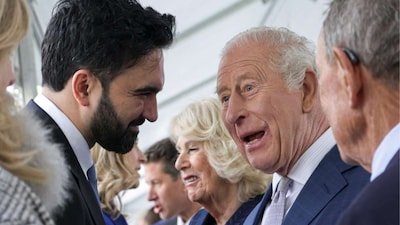
New York: New York City Mayor Zohran Mamdani has added his voice to the long-standing demand for the return of the historic Koh-i-Noor Diamond to India, saying he would personally encourage King Charles III to take that step.
Speaking ahead of a ceremonial event during the British monarch’s visit to the United States, Mamdani said that if he had a private conversation with the King, he would raise the issue directly. “I would probably encourage him to return the Koh-i-Noor Diamond,” the mayor remarked during a press interaction.
The comment came shortly before the two leaders attended a solemn ceremony at the 9/11 memorial in New York, where King Charles paid tribute to victims of the 2001 terrorist attacks. While the two did meet during the event, it remains unclear whether the topic of the diamond was discussed. Buckingham Palace has not commented on the matter.
A Symbol of Colonial Legacy
The Kohinoor diamond, one of the most famous gemstones in the world, has long been at the centre of a contentious historical debate. Originally from the Indian subcontinent, the diamond was taken by the British after the annexation of Punjab in 1849 and later presented to Queen Victoria in 1850.
Since then, it has become part of the British Crown Jewels and is currently housed in the Tower of London. For many in India, the diamond is not just a precious gem but a symbol of colonial-era exploitation and loss.
India has repeatedly called for its return, describing it as a culturally significant artifact deeply rooted in the country’s history.
Renewed Debate on Repatriation
Mamdani’s remarks have reignited global conversations about the restitution of artifacts acquired during colonial rule. As a leader of Indian origin, his stance reflects a broader sentiment shared by many who believe such items should be returned to their countries of origin.
The debate over the Kohinoor is not new. Over the years, multiple nations—including India, Pakistan, Iran, and Afghanistan—have laid claim to the diamond, citing historical ownership.
More Than a Diplomatic Gesture
While Mamdani acknowledged that the issue is not part of official diplomatic discussions, his statement underscores the continuing emotional and political significance of colonial-era artifacts.
As conversations around historical justice gain traction worldwide, calls like these highlight the enduring complexities of heritage, ownership, and accountability—issues that remain unresolved decades after the end of colonial rule.