







Pakistan is set to receive a crucial $5 billion financial lifeline from Saudi Arabia and Qatar as it grapples with mounting economic pressure triggered by a major debt repayment to the United Arab Emirates (UAE), according to multiple media reports.
The assistance comes at a critical moment for Islamabad, which is preparing to repay $3.5 billion to the UAE by the end of April after Abu Dhabi requested immediate settlement of the loan. The repayment threatens to strain Pakistan’s already fragile foreign exchange reserves, currently hovering around $16 billion.
Financial Pressure Mounts
Pakistan’s decision to repay the UAE loan marks a significant shift from previous years, when such deposits were routinely rolled over. Officials have framed the move as a matter of “national dignity,” emphasizing the importance of honoring financial commitments despite economic challenges.
However, the repayment has intensified pressure on the country’s external finances. Analysts warn that without fresh inflows, reserves could fall further, complicating Pakistan’s commitments under its ongoing International Monetary Fund (IMF) program.
The $5 billion support package from Riyadh and Doha is expected to provide temporary relief, helping Pakistan stabilize reserves and meet upcoming external payment obligations.
High-Level Talks and Strategic Support
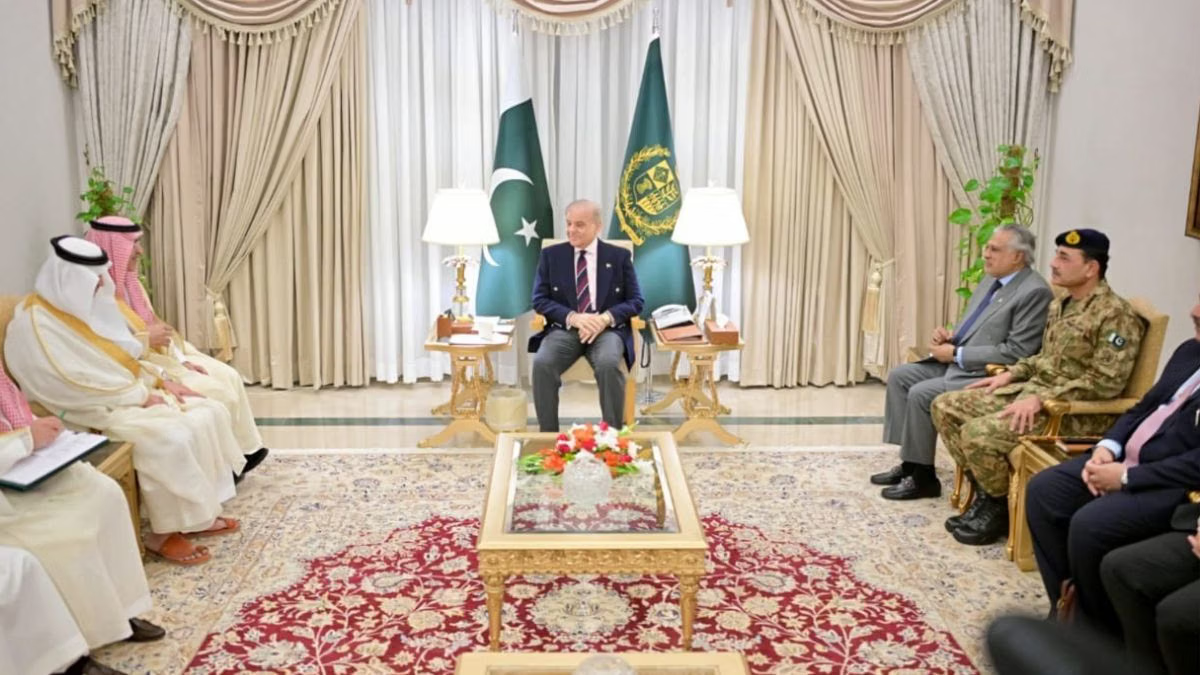
The financial assistance follows high-level meetings in Islamabad between Pakistani leadership and Saudi officials, including Finance Minister Mohammed bin Abdullah Al-Jadaan. Discussions focused on economic cooperation as well as broader regional developments.
While no formal agreement has yet been announced, officials indicate that talks on financial support had been underway for some time. Pakistan has also sought additional measures, including extending oil financing facilities and increasing cash deposits from Gulf allies.
Qatar’s involvement is seen as particularly significant, potentially diversifying Pakistan’s financial backing beyond traditional partners and signaling closer coordination among Gulf states.
Military Cooperation Expands
Alongside economic developments, Pakistan has stepped up its military cooperation with Saudi Arabia. Reports indicate that Pakistani fighter jets and military personnel have been deployed to the kingdom under a bilateral defense arrangement signed in 2025.
Initial deployments reportedly include aircraft and support staff stationed at Saudi bases, with the possibility of a larger contingent being sent if regional tensions escalate further.
The dual track of financial aid and defense collaboration underscores deepening ties between Islamabad and Riyadh, particularly amid shifting geopolitical dynamics in the Middle East.
A Delicate Balancing Act
The developments highlight Pakistan’s ongoing struggle to balance its economic vulnerabilities with geopolitical relationships. The UAE’s decision to demand repayment, combined with support from Saudi Arabia and Qatar, reflects evolving dynamics within the Gulf region.
For Islamabad, the immediate priority remains stabilizing its economy and maintaining investor confidence. While the promised $5 billion package offers short-term relief, analysts caution that deeper structural reforms and sustained external support will be essential to ensure long-term financial stability.
As Pakistan navigates this challenging phase, its ability to manage both economic pressures and strategic alliances will likely shape its trajectory in the months ahead.