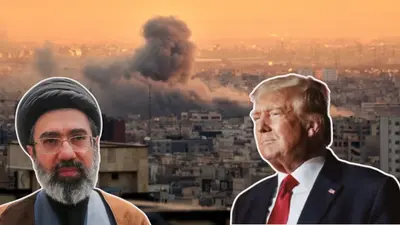

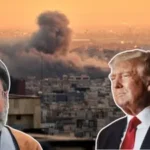


Iran’s Supreme Leader Ayatollah Mojtaba Khamenei delivered a sharp and defiant message on Thursday, escalating rhetoric against the United States and firmly rejecting any restrictions on Iran’s nuclear and missile programs.
In a strongly worded statement marking developments in the Persian Gulf region, Khamenei declared that the United States has no legitimate role in the region’s future, adding that foreign powers “have no place… except at the bottom of its waters.”
Defiance Over Nuclear Program
Khamenei made it clear that Iran will not yield to Western pressure, especially regarding its strategic capabilities. He described the country’s nuclear and missile programs as essential national assets and insisted they would remain intact despite ongoing demands from Washington to curb them.
The remarks come as the United States continues to push for a deal limiting Iran’s nuclear ambitions—an effort that has so far failed to produce a breakthrough. Iran maintains that its nuclear activities are for peaceful purposes, though international concerns persist.
Gulf Power Struggle Intensifies
Khamenei’s comments also reflect a broader geopolitical struggle unfolding in the Persian Gulf, particularly around the strategically vital Strait of Hormuz. Iran has increasingly asserted control over the waterway following months of conflict and tensions with the U.S. and its allies.
He described a “new phase” taking shape in the region, suggesting that Iran aims to reshape the balance of power and reduce foreign influence in Gulf affairs.
The Strait of Hormuz, through which a significant portion of the world’s oil supply passes, has become a flashpoint in recent months. Disruptions linked to the ongoing standoff have already impacted global energy markets and raised fears of further escalation.
Background: War, Blockade, and Stalemate
The latest rhetoric follows a turbulent period marked by military confrontation earlier this year. A U.S.-backed offensive against Iran in February triggered a wider conflict, including missile strikes and disruptions to shipping routes.
Although a ceasefire was later reached, tensions remain high. The United States has maintained pressure through sanctions and a naval blockade targeting Iranian oil exports, while Iran has responded with warnings and tighter control over regional waterways.
Diplomatic efforts to revive negotiations have stalled, with both sides holding firm to their positions.
Global Implications
Khamenei’s latest remarks signal that any immediate resolution remains unlikely. His rejection of nuclear curbs and harsh rhetoric toward Washington suggest a continued hardline approach, raising concerns about further instability in an already volatile region.
With the Persian Gulf serving as a critical artery for global energy supplies, the ongoing standoff between Iran and the United States is being closely watched worldwide. Analysts warn that prolonged tensions could have far-reaching economic and geopolitical consequences.