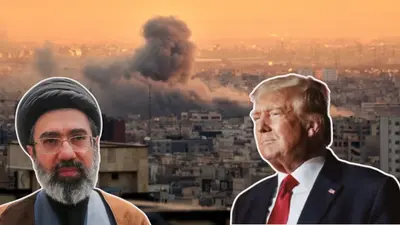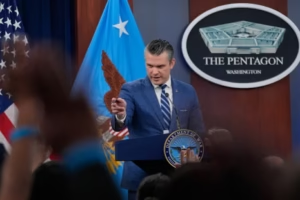






Tehran/Washington — Fresh tensions have emerged between Iran and the United States after Tehran accused Washington of violating a newly announced ceasefire agreement, raising doubts over the fragile truce and the prospects for peace talks.
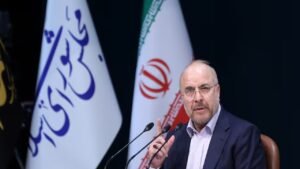
Iran’s parliamentary speaker, Mohammad Bagher Ghalibaf, sharply criticized the United States, saying recent actions had effectively rendered the ceasefire and any future negotiations “meaningless.” His remarks came just hours after both sides had agreed to a temporary halt in hostilities following weeks of intense conflict in the region.
Allegations of Violations
According to Iranian officials, the U.S. failed to uphold key elements of a proposed 10-point peace framework. Among the alleged violations were continued military developments involving Lebanon, the reported intrusion of a drone into Iranian airspace, and disagreements over Iran’s nuclear program—particularly its right to uranium enrichment.
Tehran also pointed to ongoing Israeli strikes in Lebanon as a breach of what it believed to be part of the ceasefire arrangement. However, U.S. officials have maintained that Lebanon was never included in the agreement, calling the disagreement a “misunderstanding” between the parties.
Fragile Truce Under Pressure
The ceasefire, brokered with international mediation, was intended to last for two weeks and create space for broader negotiations. But continued military activity across the region has already placed the agreement under strain.
Reports indicate that Israeli forces have continued operations against Hezbollah targets in Lebanon, while Iran has been linked to attacks on infrastructure in Gulf countries during the same period—further complicating the situation.
At the same time, tensions remain high over the strategic Strait of Hormuz, a critical global oil route. Disputes over access and control of the waterway have added another layer of uncertainty to the ceasefire’s implementation.
Diplomatic Uncertainty
Despite the accusations, there are still signs of cautious diplomatic engagement. U.S. officials have acknowledged that Iran initially presented a proposal deemed unrealistic but later submitted a revised version considered more workable.
However, Iran’s leadership appears increasingly skeptical. Officials in Tehran have warned that without clear adherence to agreed terms, negotiations would be “unreasonable” under current conditions.
Global Concerns
The escalating tensions have drawn international attention, with several countries urging both sides to preserve the ceasefire and avoid further destabilization. The conflict has already impacted global energy markets and raised fears of wider regional escalation.
For now, the ceasefire technically remains in place—but with both sides trading accusations and military activity continuing in parts of the region, its future hangs in the balance.