






In what is being described as one of the most daring rescue operations in recent military history, United States special forces successfully extracted a wounded airman deep inside Iran after a tense, multi-day mission that unfolded across rugged mountain terrain and under constant threat from enemy forces.
The dramatic episode began when an American F-15E fighter jet was shot down over Iran, leaving one of its crew members stranded behind enemy lines. While the pilot was rescued earlier, the second crew member — a weapons systems officer — faced a far more perilous ordeal.
Survival Against the Odds
Despite being injured, the officer managed to evade Iranian forces for more than a day. According to officials, he climbed nearly 7,000 feet into a mountainous region and took refuge inside a narrow crevice, using the terrain as cover while search teams closed in.
Cut off and vulnerable, the airman relied on survival training and limited communication tools. He avoided frequent use of his emergency beacon, aware that its signal could also be detected by Iranian forces hunting for him.
Reports suggest that Iranian units — along with local groups — were actively searching the area, intensifying the urgency of the rescue mission.
A Complex and Covert Operation
Once the airman’s location was identified — reportedly with the help of intelligence efforts — the US military launched a carefully coordinated rescue operation. The mission involved elite special operations forces, aircraft, and a series of diversion tactics designed to mislead Iranian forces.
A deception campaign was initiated to convince Iranian units that the stranded officer had already been extracted and was being moved elsewhere, buying crucial time for rescuers.
Under the cover of darkness, US commandos entered hostile territory, navigating difficult terrain to reach the airman. Air support played a key role, with US aircraft targeting Iranian convoys and positions to prevent them from closing in on the rescue site.
A Mission That Nearly Failed
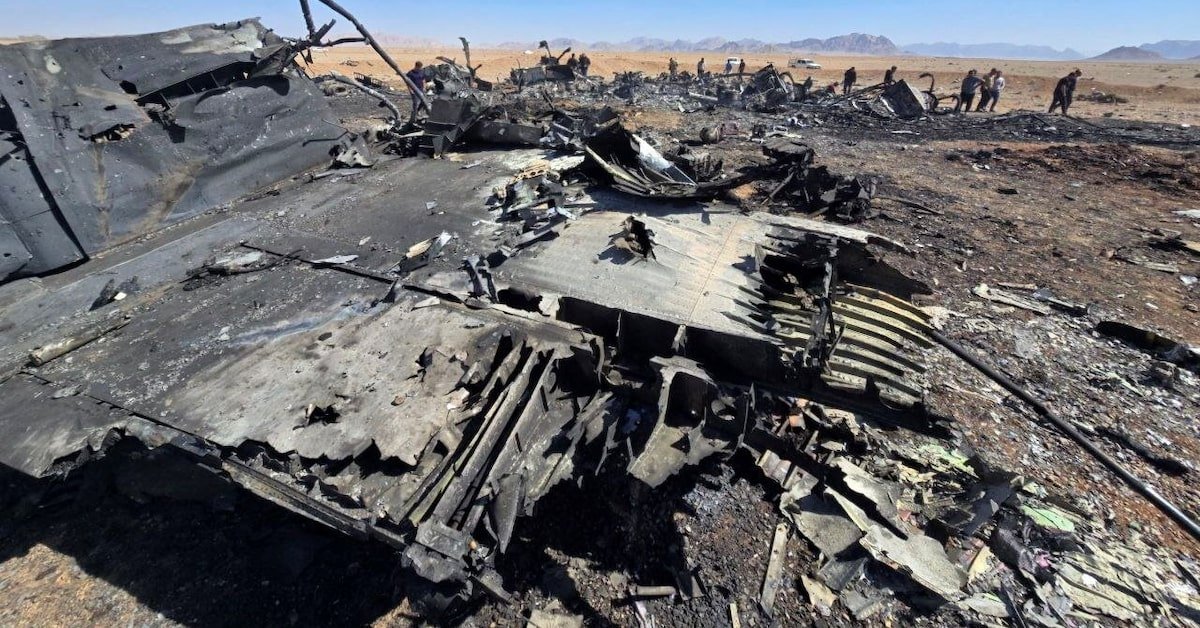
Despite the precision of the operation, the mission faced a critical setback at its final stage. Two transport aircraft used for extraction became disabled at a remote landing zone, raising fears that American troops could be stranded deep inside enemy territory.
In response, commanders made a high-risk decision to send additional aircraft into Iran to evacuate the team in multiple waves — a move that ultimately ensured the success of the mission.
To prevent sensitive technology from falling into Iranian hands, the stranded aircraft were destroyed before the forces withdrew.
Safe Extraction and Aftermath
After hours of tension and coordination, the wounded airman was successfully rescued and transported out of Iran along with the special operations team. The mission concluded without leaving personnel behind, marking a significant — and symbolic — success for the United States amid ongoing tensions in the region.
Military officials have described the operation as exceptionally challenging due to the combination of harsh terrain, the airman’s injuries, and the rapid response of Iranian forces.
A High-Stakes Message
Beyond the immediate rescue, the operation underscores the US military’s commitment to recovering its personnel, even in the most hostile environments. It also highlights the increasing intensity of the conflict in the region, where aerial confrontations and covert operations are becoming more frequent.
For the rescued officer, survival depended on endurance, training, and a bit of luck. For the rescuers, success required precision, coordination, and the willingness to take extraordinary risks.
Together, it was a mission that came perilously close to failure — but ultimately ended as a remarkable story of survival and military resolve.