









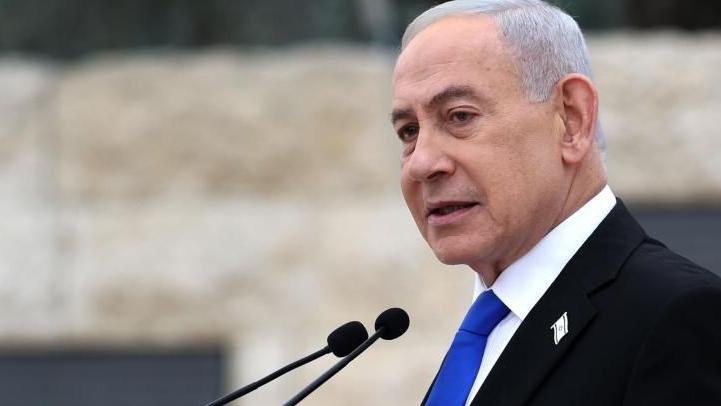
Israeli Prime Minister Benjamin Netanyahu has revealed that he was diagnosed with early-stage prostate cancer and has since undergone successful treatment, saying the disease has been completely eliminated with “no trace” remaining.
The 76-year-old leader disclosed the information as part of his annual medical report, explaining that the cancer was discovered during a routine check-up following earlier prostate-related health issues. According to official medical details, the tumour was detected at a very early stage, with no signs of spread, allowing doctors to treat it effectively using targeted therapy.
In his statement, Netanyahu said the treatment removed the cancer entirely, describing it as a “problem” that had been resolved. Medical professionals confirmed that he underwent focused radiation therapy and is now in good overall health.
Diagnosis discovered during routine follow-up
The cancer was reportedly identified during follow-up examinations after Netanyahu underwent surgery in 2024 for a benign prostate enlargement. Doctors found a small malignant tumour—less than a centimetre in size—which had not metastasized.
Although immediate intervention was not considered urgent, Netanyahu opted for treatment soon after diagnosis. He continued working throughout the process, stating that the procedure was relatively brief and did not significantly disrupt his duties.
Secrecy linked to regional tensions
Netanyahu also acknowledged that he delayed publicly disclosing his diagnosis for about two months. He said the decision was driven by concerns that the information could be exploited by Iran amid ongoing regional tensions.
The announcement comes against the backdrop of heightened conflict in the Middle East, during which misinformation about the prime minister’s health—including false reports of his death—circulated on social media. Netanyahu later appeared in public to dismiss those claims.
Health history under scrutiny
This latest revelation adds to a series of health-related developments for the Israeli leader in recent years. Netanyahu previously underwent prostate surgery in 2024 and had a pacemaker implanted in 2023.
Despite these concerns, his latest medical report describes him as being in “excellent physical condition,” with no remaining evidence of cancer following treatment.
Political implications
The disclosure is likely to draw attention both domestically and internationally, as questions around transparency and leadership health remain sensitive in Israeli politics. Elections are expected later this year, adding further significance to Netanyahu’s public reassurances about his fitness to serve.
For now, Netanyahu’s office maintains that the prime minister has fully recovered and continues to carry out his responsibilities without limitation—closing a chapter on a diagnosis that, while serious, was caught early and successfully treated.