








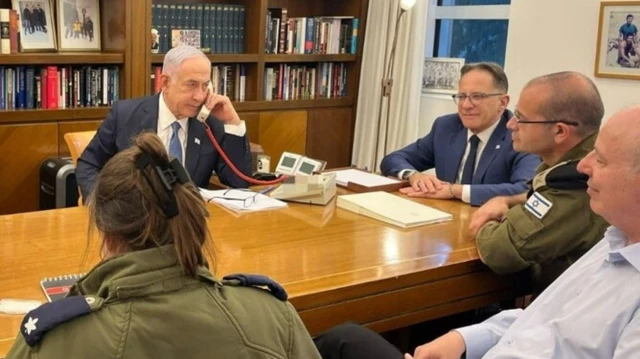
Israeli Prime Minister Benjamin Netanyahu has officially approved the appointment of Major General Roman Gofman as the next director of the Mossad, marking a significant leadership change at the country’s top intelligence service.
The decision follows the endorsement of a senior advisory committee, after which Netanyahu signed Gofman’s formal appointment letter. Gofman is set to begin his five-year term on June 2, succeeding current Mossad chief David Barnea, whose tenure is coming to an end.
A Military Leader Takes the Helm
Gofman, 49, currently serves as Netanyahu’s military secretary, a role that places him at the center of Israel’s security decision-making. A seasoned officer in the Israel Defense Forces (IDF), he has been involved in multiple military operations and played a key role during the October 2023 Hamas-led attack, reportedly rushing to assist communities under fire.
His appointment reflects Netanyahu’s confidence in his leadership abilities, with the prime minister describing him as a “bold and creative” officer capable of contributing significantly to Israel’s national security.
Controversy and Criticism
Despite the approval, the appointment has sparked debate within Israel’s political and intelligence circles. Critics, including some current and former Mossad officials, have raised concerns about Gofman’s lack of direct intelligence experience—an unusual departure from past appointments to the role.
Additionally, questions have resurfaced about past controversies during his military career, including allegations linked to an online influence operation.
The advisory committee itself was not unanimous in its decision, with at least one member opposing the appointment on integrity grounds.
Strategic Implications
The Mossad, Israel’s national intelligence agency responsible for covert operations, intelligence gathering, and counterterrorism, plays a critical role in the country’s security framework. Its director reports directly to the prime minister and holds significant influence over strategic operations.
Gofman’s appointment signals a potential shift in leadership style, bringing a more military-oriented perspective to an agency traditionally led by intelligence professionals. Analysts suggest this could impact how Israel approaches regional threats and covert operations in the coming years.
Looking Ahead
As Gofman prepares to assume office in June, attention will focus on how he navigates both internal skepticism and external security challenges. His leadership will come at a time of heightened regional tensions, placing the Mossad—and its new chief—under intense scrutiny.
Whether his military background proves to be an asset or a liability remains to be seen, but his appointment marks a notable moment in the evolution of Israel’s intelligence leadership.