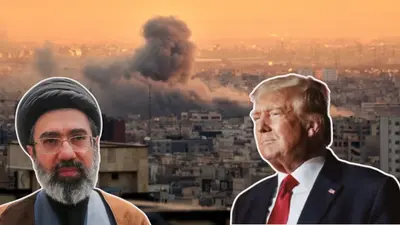



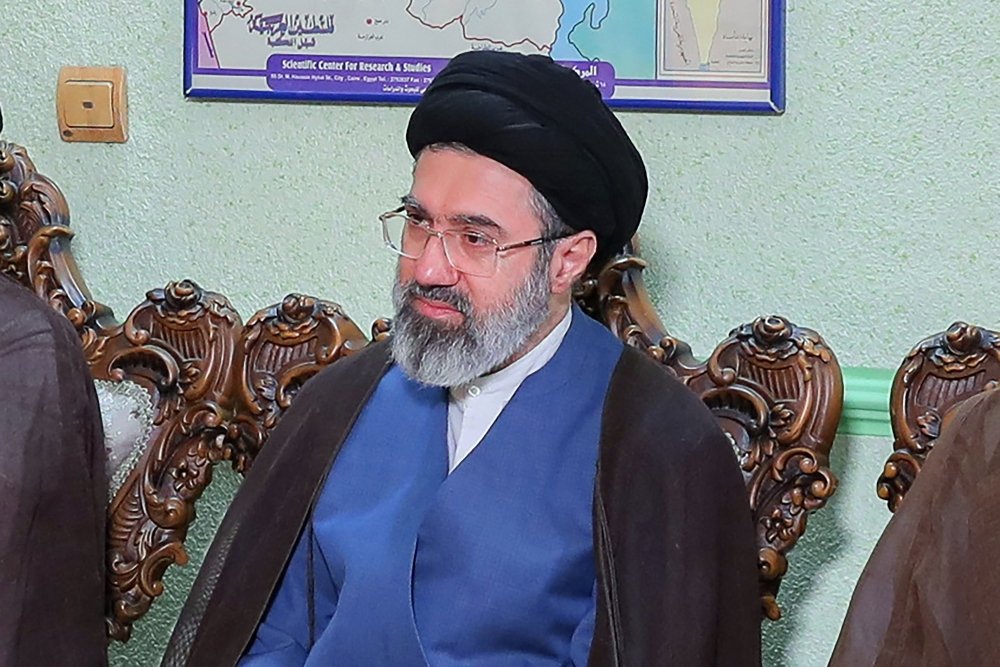
Tehran: Iran’s Supreme Leader Mojtaba Khamenei has announced that the country is entering a “new stage” in its management of the strategically vital Strait of Hormuz, signaling a sharp escalation in regional tensions despite an ongoing fragile ceasefire with the United States and its allies.
In a statement broadcast on Iranian state media, Khamenei said Tehran would fundamentally shift how it controls and oversees the narrow waterway, which is one of the world’s most critical oil transit routes. He warned that those responsible for recent attacks on Iran “will not go unpunished” and vowed that the country would seek compensation for war-related losses.
Khamenei’s remarks come weeks after a deadly conflict involving the United States and Israel that began in late February 2026. The war included airstrikes that killed his father, former Supreme Leader Ayatollah Ali Khamenei, and triggered a wider regional crisis.
Strategic Waterway at the Center of Tensions
The Strait of Hormuz, located between Iran and Oman, handles a significant portion of the world’s oil shipments. Since the outbreak of the conflict, shipping traffic through the strait has been severely disrupted, with many vessels avoiding the route due to security concerns.
Recent reports indicate that Iran’s actions have effectively restricted or halted normal transit, stranding tankers and raising fears of a global energy shock.
Khamenei’s declaration of a “new phase” suggests that Iran may tighten its grip further or introduce new rules governing passage through the waterway, a move likely to heighten uncertainty in global oil markets.
Defiance Amid Fragile Ceasefire
Despite a tentative ceasefire agreement, Khamenei emphasized that Iran is not seeking war but will not compromise on what it considers its sovereign rights.
He also reiterated Iran’s intent to retaliate against perceived aggression and to demand reparations for damages and casualties suffered during the conflict.
The statement underscores Tehran’s defiant posture at a time when diplomatic efforts are underway to stabilize the region. Analysts say the announcement complicates negotiations and raises the risk of renewed confrontation.
Global Concerns Over Energy Security
The situation has triggered alarm among global energy producers and policymakers. Officials in the Gulf region have warned that prolonged disruption in the Strait of Hormuz could have severe consequences for global oil supply and economic stability.
With a large share of the world’s oil shipments passing through the strait, any sustained restriction could drive up prices and disrupt supply chains worldwide.
Uncertain Road Ahead
Khamenei’s announcement marks a critical moment in the ongoing West Asia crisis. While Iran signals readiness to defend its interests, the international community continues to push for de-escalation and the restoration of safe navigation through the strait.
For now, the future of one of the world’s most important energy corridors remains uncertain, with geopolitical tensions showing few signs of easing.