








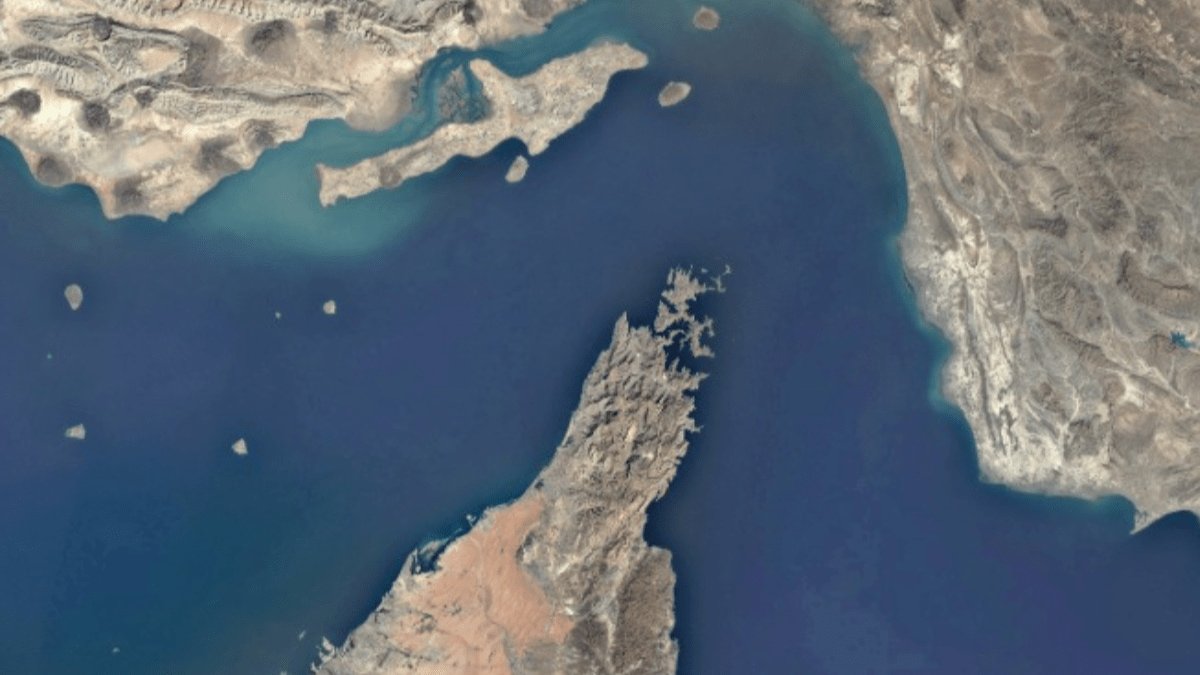
Tehran — Iran has announced that “non-hostile” ships will be allowed safe passage through the strategically vital Strait of Hormuz, offering a limited easing of restrictions amid ongoing conflict in the region.
In a statement communicated to international maritime bodies, Iranian authorities said vessels that are not linked to countries involved in hostilities against Iran can transit the narrow waterway, provided they coordinate with Iranian officials.
The Strait of Hormuz, a critical global shipping route through which roughly one-fifth of the world’s oil supply passes, has been at the center of escalating tensions following clashes involving Iran, the United States, and Israel. The waterway has seen significant disruption in recent weeks, with many ships either rerouted or stranded due to security concerns.
Conditional access amid conflict
Iran’s latest position signals a shift from earlier warnings, when officials had threatened to block or attack vessels attempting to pass through the strait. Now, Tehran says passage is possible—but only for ships it does not consider hostile.
According to officials, vessels associated with countries engaged in military action against Iran would not qualify for what is known under international law as “innocent passage.”
Reports suggest that some ships from countries viewed as neutral or friendly—particularly in Asia—have already been allowed to pass through the corridor under Iranian oversight.
Global energy and economic concerns
The uncertainty surrounding the Strait of Hormuz has had immediate consequences for global markets. Oil prices have surged amid fears of prolonged disruption, while shipping companies face rising insurance costs and heightened risks.
The situation has also led to logistical bottlenecks, with hundreds—if not thousands—of vessels delayed in surrounding waters as they await clarity on safe transit conditions.
Regional players, including Oman, have been working behind the scenes with Iran to help ensure safe navigation and prevent further escalation, though details remain limited.
Strategic leverage
Analysts say Iran’s selective approach to allowing passage reflects a broader strategy to maintain control over one of the world’s most important maritime chokepoints while applying pressure on its adversaries.
By permitting some ships through while restricting others, Tehran appears to be balancing economic considerations with military and political leverage. The move also raises questions about freedom of navigation and the future of international shipping norms in conflict zones.
Uncertain path ahead
Despite the announcement, risks remain high. Reports of attacks on vessels, the presence of naval mines, and ongoing military activity in the region continue to threaten stability in the strait.
For now, Iran’s message is clear: safe passage is possible—but only under its terms.
As diplomatic efforts continue, the future of one of the world’s most crucial energy corridors remains uncertain, with global markets closely watching every development.