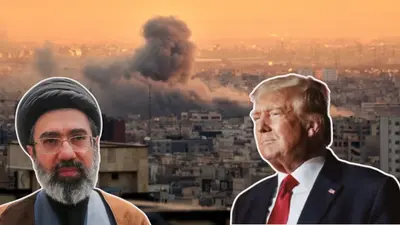






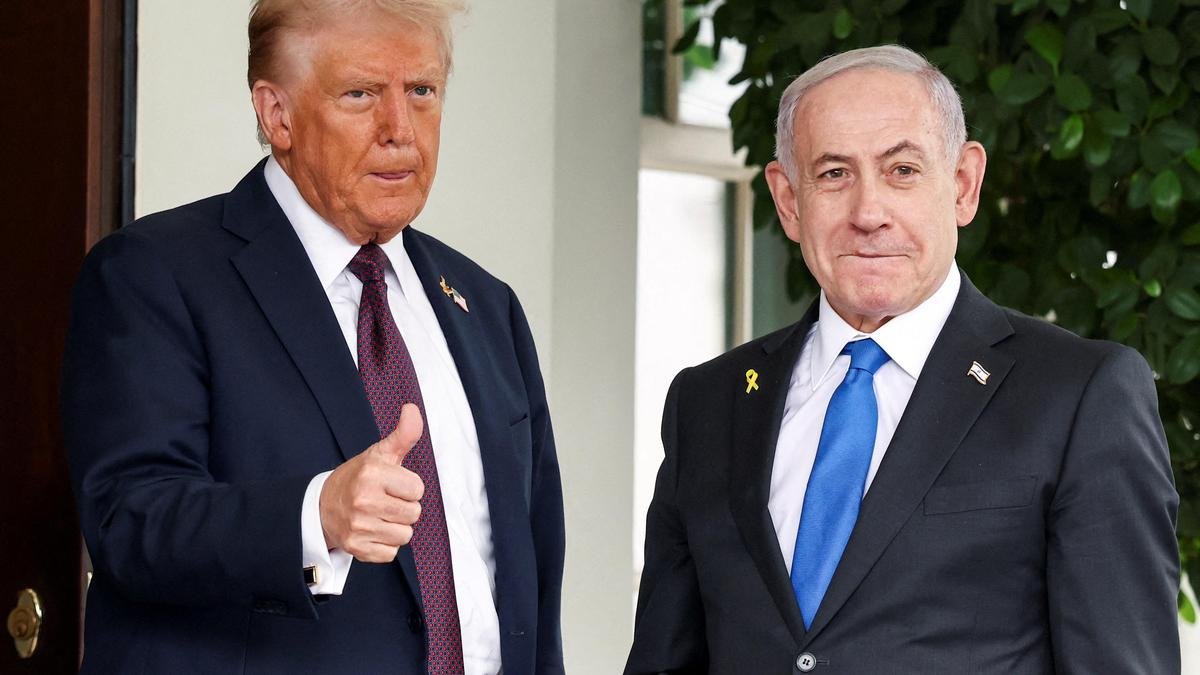
Tensions between the United States and Israel have come under renewed scrutiny after a controversial strike on Iran’s key gas infrastructure exposed apparent differences between former U.S. President Donald Trump and Israeli Prime Minister Benjamin Netanyahu.
The disagreement centers on Israel’s recent attack on Iran’s South Pars gas field—one of the world’s largest natural gas reserves and a critical pillar of Iran’s energy sector. The strike, which significantly disrupted Iran’s gas production, has also intensified an already volatile regional conflict and raised concerns about coordination between Washington and Tel Aviv.
Conflicting Narratives
In the aftermath of the attack, Trump publicly suggested that he had not been informed in advance and indicated discomfort with targeting energy infrastructure. He reportedly urged Israel to avoid further strikes on such facilities, citing concerns over rising global energy prices and the risk of broader escalation.
Netanyahu, however, offered a slightly different version of events. Israeli officials have indicated that the United States was aware of the operation beforehand, even if there were differences over its scope and timing. The Israeli leader has defended the strike as a strategic move aimed at weakening Iran’s financial and military capabilities.
This divergence in messaging has led analysts to question how closely aligned the two leaders are in managing the ongoing conflict.
Strategic Differences
Beyond the immediate dispute over the gas field attack, deeper strategic differences appear to be emerging.
The United States has largely focused on limiting Iran’s military capabilities—particularly its missile systems and naval operations—while trying to avoid actions that could destabilize global energy markets. Israel, on the other hand, seems more willing to target Iran’s economic infrastructure and leadership, viewing such moves as necessary to weaken Tehran’s long-term position.
These differing priorities have complicated what has otherwise been a close military partnership since the conflict escalated in late February.
Regional and Global Impact
The strike on South Pars has had far-reaching consequences. Iran retaliated with attacks on energy infrastructure across the Gulf, including facilities linked to key U.S. allies, raising fears of a wider regional war.
Global energy markets have also reacted sharply. Disruptions to gas production and threats to shipping routes like the Strait of Hormuz have pushed oil and gas prices higher, adding economic pressure worldwide.
Meanwhile, countries in the region—including Saudi Arabia, Qatar, and the United Arab Emirates—have voiced alarm over the targeting of energy infrastructure, warning that such actions could destabilize global supply chains.
Questions Over Coordination
The episode has sparked broader questions about the level of coordination between the U.S. and Israel. While both countries remain aligned in their opposition to Iran, the differing responses to the gas field strike suggest that their approaches may not be fully synchronized.
Some analysts argue that the public disagreement could weaken the perception of a unified front, potentially emboldening Iran or complicating diplomatic efforts. Others see it as a tactical divergence rather than a fundamental split, noting that both nations continue to cooperate militarily.
A Fragile Alliance
Despite the apparent differences, Trump and Netanyahu have both emphasized the strength of U.S.–Israel ties. However, the gas field incident highlights the challenges of maintaining alignment in a rapidly escalating conflict with global implications.
As the situation continues to evolve, the key question remains whether Washington and Tel Aviv can reconcile their strategies—or whether further divergences will shape the next phase of the war.