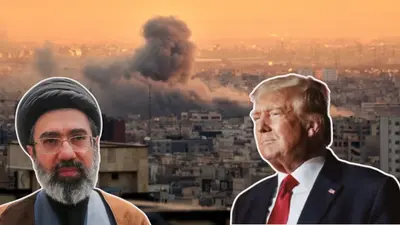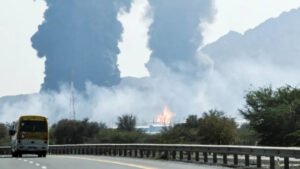








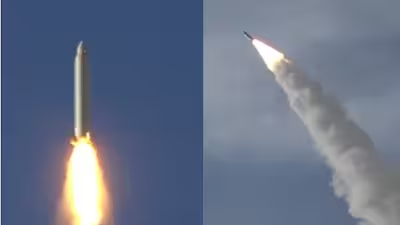
Tehran / Tel Aviv: In a significant escalation of the ongoing conflict in West Asia, Iran has reportedly deployed its advanced Sejjil ballistic missile—often referred to as the “dancing missile”—for the first time since the war began, drawing global attention to its sophisticated capabilities and potential impact on regional security.
The launch is part of a broader wave of Iranian missile strikes targeting Israeli and U.S.-linked positions, marking a new phase in the conflict that has intensified over recent weeks.
A Strategic First in the Conflict
According to multiple reports, Iran’s Islamic Revolutionary Guard Corps (IRGC) included the Sejjil missile in its latest barrage, describing the strikes as retaliation against military targets. This is the first confirmed operational use of the missile in the current war, signaling a shift toward more advanced weapon systems in Iran’s arsenal.
The conflict itself erupted following large-scale military exchanges between Iran, Israel, and U.S. forces, with both sides carrying out repeated strikes on strategic installations across the region.
What Makes the ‘Dancing Missile’ Unique?
The Sejjil missile stands out due to its high manoeuvrability and evasive flight pattern, which has earned it the nickname “dancing missile.” Unlike traditional ballistic missiles that follow predictable trajectories, the Sejjil can alter its path mid-flight, making it far more difficult for air defence systems to intercept.
Experts say this erratic movement can confuse radar tracking and missile defence systems, posing a serious challenge even to advanced interception technologies.
Key Features of the Sejjil Missile
-
Type: Medium-range ballistic missile (MRBM)
-
Range: Approximately 2,000 kilometres
-
Fuel: Solid fuel (allows faster launch readiness)
-
Payload: Around 700 kg warhead
-
Launch capability: Mobile platforms
The missile’s solid-fuel propulsion system is considered a major advantage. Unlike older liquid-fuel missiles that require lengthy preparation, the Sejjil can be launched quickly, reducing the chances of being detected or destroyed before launch.
Why It Matters
Military analysts believe the deployment of the Sejjil missile represents a significant escalation in the conflict. Its range allows it to strike targets across much of the Middle East, while its manoeuvrability makes it harder to defend against.
The move also highlights Iran’s continued focus on advancing its missile technology as a key element of its strategic deterrence.
With tensions already high, the introduction of such advanced weaponry raises concerns about further escalation and the possibility of a wider regional conflict.
Growing Global Concern
The use of the Sejjil missile has triggered alarm among international observers, who warn that the evolving nature of missile technology could complicate existing defence systems and increase the risk of prolonged conflict.
As the war continues, all eyes remain on how regional powers—and global actors—respond to this latest development.