









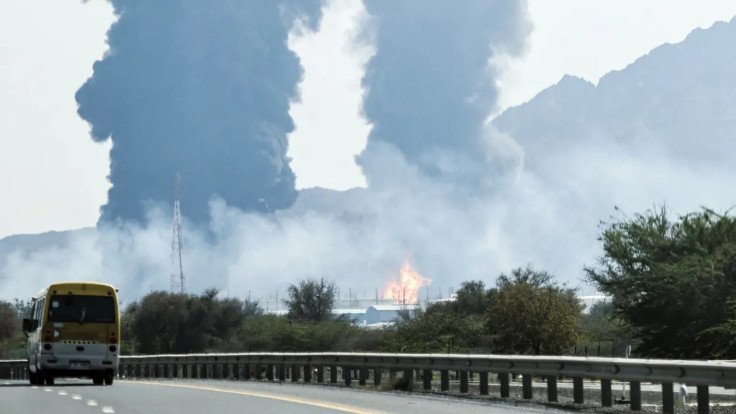
Dubai, March 17, 2026 — Air travel across the Middle East faced fresh disruption after the United Arab Emirates (UAE) temporarily barred airlines from landing in Dubai, following a drone strike that triggered a fire at a fuel storage facility near the city’s main airport.
The incident, which occurred earlier this week, saw a drone hit a fuel depot close to Dubai International Airport, igniting a blaze and forcing authorities to suspend flight operations as a safety precaution. Officials moved swiftly to contain the fire, but the impact on aviation was immediate and widespread.
Sudden Ban on Incoming Flights
In response to the attack, UAE authorities imposed a temporary ban on all incoming flights to Dubai. The decision, described as a precautionary measure, aimed to ensure passenger safety and prevent further risks while emergency teams handled the situation.
The restriction left several airlines scrambling to adjust routes, with flights either diverted to nearby airports or delayed mid-journey. Aviation authorities have not specified how long the landing ban will remain in place, adding to uncertainty for travelers and airlines alike.
Major Disruptions at a Global Aviation Hub
Dubai International Airport, one of the busiest airports in the world for international travel, experienced significant operational disruption. Flights were halted for several hours, and many aircraft already en route were forced to turn back or reroute to alternative destinations.
Airlines including major international carriers scaled back operations, while passengers were advised to avoid heading to the airport until further notice. The disruption also affected connecting flights, cargo operations, and travel plans for thousands of passengers.
Fire Contained, But Tensions Remain
Emergency services quickly responded to the fuel depot fire, bringing it under control within hours. Authorities confirmed that no injuries were reported at the airport itself, though the incident raised serious concerns about infrastructure vulnerability.
The drone strike is part of a broader pattern of escalating attacks in the region, linked to ongoing geopolitical tensions involving Iran and its adversaries. In recent weeks, the UAE has faced multiple missile and drone threats, with air defence systems intercepting several incoming projectiles.
Wider Impact on Regional Travel
The incident has had ripple effects across the global aviation network. Several international airlines have suspended or reduced flights to the Gulf region, citing safety concerns and unstable airspace conditions.
Travel advisories have also been issued by multiple countries, urging citizens to remain cautious and stay updated on flight schedules. The disruptions come at a time when the Middle East is already dealing with heightened military activity and airspace restrictions.
Gradual Resumption Expected
While authorities have begun restoring limited operations, a full return to normalcy may take time. Officials are closely monitoring the situation and coordinating with airlines to safely resume services.
For now, passengers are advised to check with airlines before traveling and remain prepared for delays or last-minute changes.