










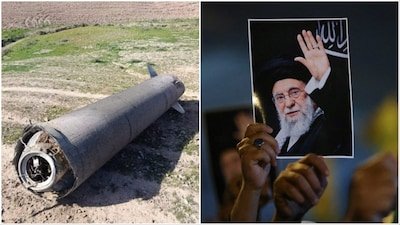
In a dramatic escalation of tensions in the Middle East, reports say Israel used a powerful weapon known as the Blue Sparrow missile in a strike that killed Iran’s Supreme Leader, Ali Khamenei, in Tehran. The operation has drawn global attention not only because of its political impact but also because of the sophisticated technology behind the missile used in the attack.
The Blue Sparrow has often been described as a “missile from space” due to its flight path, which sends it high above the Earth before it descends rapidly toward its target. Analysts say this unusual trajectory makes the weapon extremely difficult for air-defense systems to intercept.
The Strike That Shook Tehran
According to multiple reports, the missile strike targeted a heavily protected compound in Tehran where Iran’s top leadership was believed to be located. The attack was part of a broader military campaign by Israel and its allies targeting Iran’s military infrastructure and leadership.
The strike reportedly killed Ali Khamenei, who had led Iran since 1989, along with several senior officials. The incident marked one of the most significant developments in the ongoing confrontation between Israel and Iran.
The killing of Iran’s top leader triggered immediate reactions across the world. Iran vowed retaliation, while international organizations warned that the strike could further escalate an already volatile regional conflict.
What Is the Blue Sparrow Missile?
The Blue Sparrow is an air-launched ballistic missile developed by Israeli defense company Rafael Advanced Defense Systems. Originally, the missile was designed as a target missile to help test Israel’s missile defense systems, including the Arrow missile defense system.
Over time, however, the technology was adapted for offensive missions, allowing the missile to strike ground targets with high precision.
Key Characteristics of the Blue Sparrow
-
Type: Air-launched ballistic missile
-
Length: About 6.5 meters
-
Weight: Around 1,900 kilograms
-
Range: Up to roughly 2,000 km
-
Launch Platform: Typically launched from fighter jets such as F-15 aircraft
These specifications allow the missile to strike targets far beyond the launching aircraft’s location, often from outside the target country’s airspace.
Why It Is Called a “Missile From Space”
The Blue Sparrow follows a ballistic trajectory, meaning it travels in an arc similar to long-range missiles. After launch, the missile climbs high into the atmosphere — sometimes reaching near-space altitudes — before descending almost vertically toward its target.
This approach has several advantages:
-
High speed: Ballistic missiles travel extremely fast, making them difficult to intercept.
-
Steep attack angle: The missile can strike from above, bypassing many defensive systems designed to detect horizontal threats.
-
Long range: It can hit targets hundreds or thousands of kilometers away.
Because of this high-altitude flight path and sudden descent, media reports often describe the Blue Sparrow as coming “from space.”
The Sparrow Missile Family
The Blue Sparrow is part of a larger family of Israeli missiles known as the Sparrow series, which includes three main variants:
-
Black Sparrow: Designed to simulate short-range ballistic missiles.
-
Blue Sparrow: A medium-range system with longer reach and higher speed.
-
Silver Sparrow: Built to simulate long-range threats such as Iranian Shahab-class missiles.
These missiles were initially created to help Israel test its missile-defense systems, ensuring they could intercept real ballistic threats. Over time, however, some versions have been modified for combat use
How the Missile Is Launched
Unlike traditional ground-launched ballistic missiles, the Blue Sparrow is typically launched from fighter aircraft. Israeli Air Force jets such as the F-15 carry the missile and release it while flying at high altitude.
Once released, the missile ignites its booster and climbs rapidly toward the upper atmosphere. After reaching its peak trajectory, it separates and sends a warhead toward the target, descending at extremely high speed.
This method gives the missile greater range and flexibility, allowing aircraft to launch it from safe distances.
Strategic Impact of the Strike
Military analysts say the reported use of the Blue Sparrow highlights how modern warfare is increasingly dominated by long-range precision weapons. By striking from outside an adversary’s airspace, countries can reduce risks to their pilots and aircraft.
The attack also demonstrated Israel’s ability to reach deeply into Iran with advanced missile technology. Experts believe this could significantly alter the strategic balance in the region.
However, the strike also raises concerns about further escalation between Israel and Iran, two regional powers with a long history of conflict.
Global Reaction
Following the reports of Khamenei’s death, governments around the world called for restraint and diplomacy. The United Nations urged both sides to avoid further escalation that could destabilize the wider Middle East.
Meanwhile, Iran vowed to respond to the attack and warned that it would not allow such strikes to go unanswered.
Conclusion
The Blue Sparrow missile represents one of the most advanced weapons in Israel’s arsenal. Originally designed as a testing tool for missile defense systems, it has evolved into a powerful long-range strike weapon capable of hitting targets with high precision.
Its reported use in the strike that killed Iran’s Supreme Leader has brought global attention to both the weapon itself and the growing military confrontation between Israel and Iran.
As tensions remain high, the incident underscores how modern missile technology can shape geopolitical conflicts — and how a single precision strike can have far-reaching political and strategic consequences.