








Two Indian nationals have been killed after an oil tanker was struck in an attack near the strategically important Strait of Hormuz, close to Oman’s coast. The incident occurred amid escalating tensions in the Middle East linked to the ongoing conflict involving Iran, the United States, and Israel.
Attack on the Oil Tanker ‘Skylight’
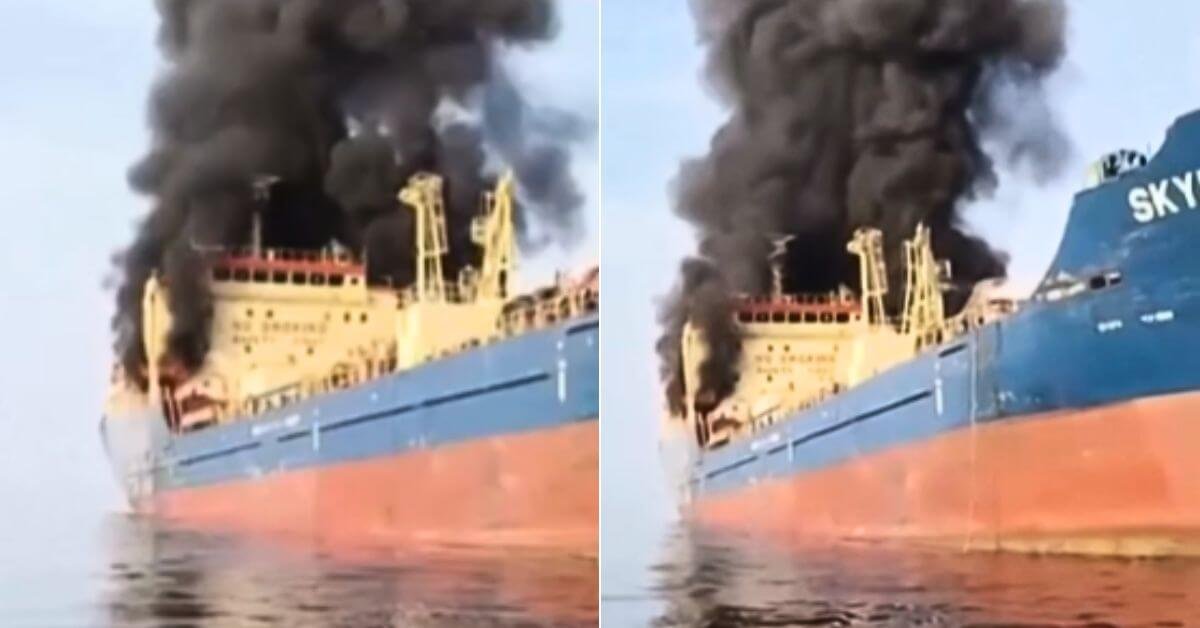
The tanker, identified as Skylight, was sailing near Oman’s Musandam peninsula when it was hit by a projectile during heightened military activity in the region. The vessel was flying the flag of Palau and had a crew of 20 people on board, including 15 Indians and five Iranian nationals.
Initial reports suggested that several crew members had been injured but that everyone had survived the strike. However, authorities later confirmed that two Indian sailors were missing following the attack and were eventually declared dead.
The tanker reportedly caught fire after the impact, with smoke seen rising from the vessel as emergency teams rushed to respond.
Crew Evacuated After Strike
Following the attack, all surviving crew members were evacuated from the damaged ship. Some of them suffered injuries and were taken for medical treatment.
Officials said the crew had been operating the tanker in the waters near Khasab, Oman, a location that lies close to the Strait of Hormuz — one of the world’s most important maritime routes for oil shipments.
The Strait of Hormuz connects the Persian Gulf with the Gulf of Oman and is used by a significant portion of global oil exports, making any disruption there a major international concern.
Escalating Conflict in the Region
The attack comes amid growing hostilities between Iran and its regional adversaries. In recent weeks, tensions have intensified following military strikes involving the United States and Israel, prompting retaliatory actions in the Gulf region.
Several commercial vessels have reportedly been targeted during the escalation, raising fears of wider instability in one of the world’s most critical energy corridors.
Shipping companies have already begun reassessing routes through the region due to security risks, and some major operators have temporarily halted voyages through the strait.
Impact on Global Shipping
The Strait of Hormuz is considered a vital chokepoint for global trade. Roughly a fifth of the world’s oil supply passes through the narrow waterway every day. Disruptions to shipping in this area can have immediate consequences for global energy markets.
Recent attacks on vessels and military warnings have caused shipping traffic in the region to drop significantly, with many companies opting to delay or reroute shipments to avoid potential threats.
Maritime security agencies have warned that the situation could worsen if the conflict continues to escalate.
India Monitoring the Situation
Indian authorities are closely monitoring the developments, particularly because many Indian sailors work on international merchant ships operating in the Gulf region.
Officials have expressed condolences to the families of the deceased sailors and said they are coordinating with local authorities to ensure assistance for the remaining crew members.
India has one of the largest populations of seafarers in the world, and thousands of them work aboard commercial vessels in the Middle East shipping lanes.
Growing Concerns for Seafarers
The attack has once again highlighted the risks faced by civilian crews navigating through conflict zones. Seafarers working on tankers and cargo ships often find themselves caught in geopolitical tensions far from their home countries.
International maritime organizations and labor unions have called for stronger protection measures for merchant vessels and their crews operating in high-risk regions.
As tensions continue to rise in the Gulf, experts warn that more incidents could occur, posing dangers not only to shipping crews but also to the stability of global energy supplies.