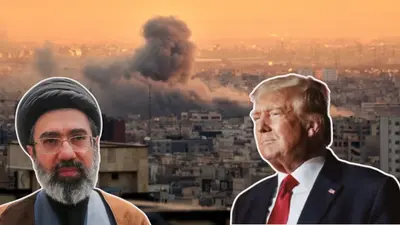




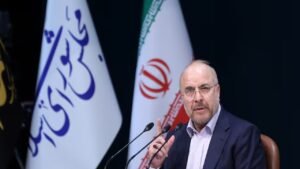
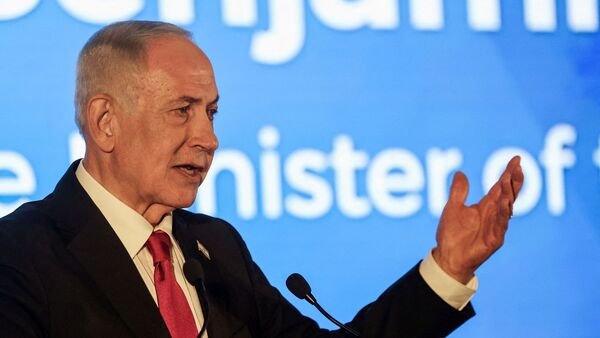
Jerusalem / Geneva — Israeli Prime Minister Benjamin Netanyahu has made it clear that any prospective nuclear agreement between the United States and Iran must go far beyond temporary limits on uranium enrichment — pushing for a dismantling of Tehran’s nuclear infrastructure as talks continue in Geneva this week.
Speaking on Sunday at a high-profile gathering in Jerusalem of American Jewish community leaders, Netanyahu spelled out his central concern: halting Iran’s nuclear program is not enough. He said Iran must be stripped of its ability to enrich nuclear material in the first place. “There shall be no enrichment capability — not stopping the enrichment process, but dismantling the equipment and the infrastructure that allows you to enrich in the first place,” he said, underlining his scepticism that a deal limited to enrichment curbs would be sufficient.
The prime minister’s comments came after a recent visit to Washington, where he met U.S. President Donald Trump to discuss the terms of negotiations now underway between U.S. and Iranian officials in Geneva, Switzerland. These talks are aimed at defusing growing tensions between Washington and Tehran over Iran’s nuclear ambitions and preventing a broader conflict in the Middle East.
Deal Must Yield Economic Gains, Iran Says
While Netanyahu insists on stringent conditions, Iranian officials have offered a different tone. Tehran’s diplomats heading to Geneva have described both energy and economic cooperation — such as joint oil and mining ventures and aircraft sales — as part of what could make an agreement worthwhile. They have also signalled flexibility on certain elements of their nuclear program, hinting at compromises on uranium enrichment in exchange for sanctions relief — although Iran has firmly rejected ending enrichment altogether.
Tehran’s Deputy Foreign Minister said in recent comments that the ball is “in America’s court” to show seriousness about a deal, emphasizing that Tehran would insist on both economic incentives and preservation of certain nuclear activities.
A Broader Strategic Picture
The deep divide between Netanyahu’s demands and Tehran’s conditions reflects how complex and fragile the diplomatic effort has become. The United States, for its part, appears to be pursuing a dual strategy — engaging in negotiations while reinforcing its military position in the region. A second U.S. aircraft carrier has been deployed to the Middle East as a hedge should diplomacy falter, U.S. officials have revealed.
Netanyahu also used his address to outline broader strategic goals for Israel’s relationship with Washington. He called for a gradual phasing out of U.S. military aid over the next decade, proposing a shift from dependence on aid toward a “true partnership,” citing Israel’s robust economy as justification.
Diplomacy at a Crossroads in Geneva
With a second round of talks slated in Geneva, the United States and Iran are trying to navigate a path through decades of mistrust, sanctions and regional rivalries. While Tehran frames its nuclear program as peaceful and seeks economic benefits, Netanyahu and other regional leaders view Iran’s nuclear capabilities as an existential threat that must be addressed decisively.
As negotiations continue, the world watches closely — balancing hope for an accord that could reduce tensions with concern that disagreements over core issues like uranium enrichment and verification may yet derail diplomacy