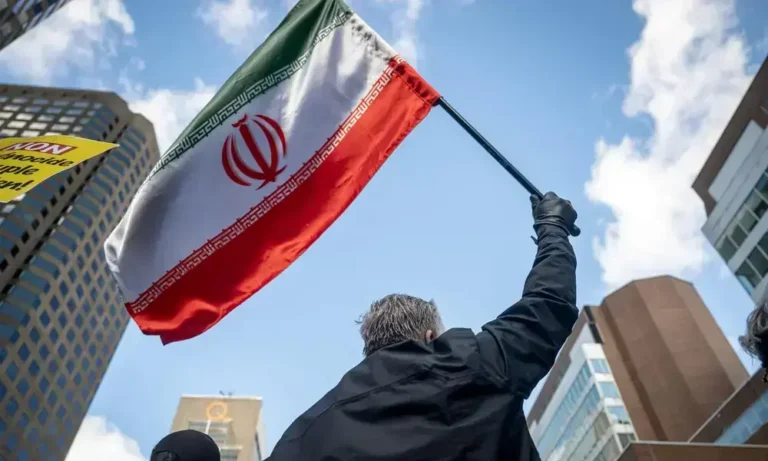






Tehran/Washington/Beirut — A fragile ceasefire between the United States and Iran is already under severe strain after Tehran moved to close the strategically vital Strait of Hormuz in response to intense Israeli airstrikes on Lebanon, dramatically escalating tensions across the Middle East.
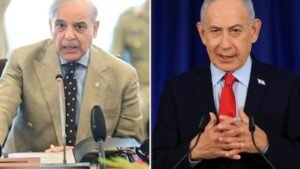
The latest developments come just hours after Washington and Tehran agreed to a two-week ceasefire, a move initially seen as a step back from the brink of a wider regional war. The agreement, reportedly brokered through diplomatic efforts involving Pakistan, included provisions to de-escalate hostilities and ensure the reopening of the Strait of Hormuz — a critical artery for global oil shipments.
Strait of Hormuz Shut Amid Escalation
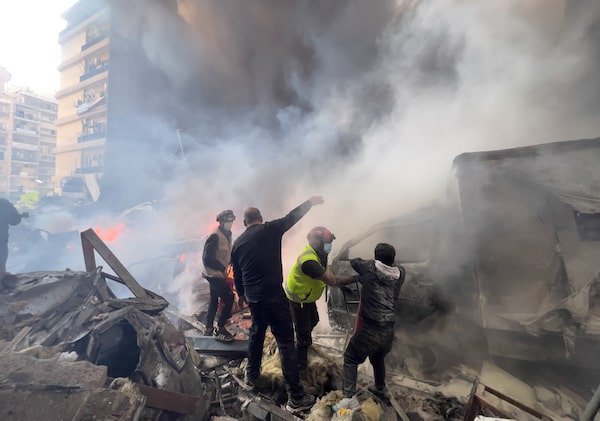
Despite the ceasefire announcement, Iran shut down access to the Strait of Hormuz following a wave of Israeli strikes in Lebanon. Reports indicate that Israel launched over 100 airstrikes in a short span, targeting Hezbollah positions and causing significant casualties.
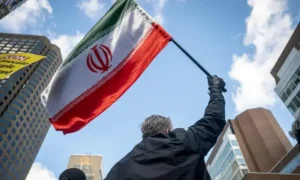
Tehran linked its decision directly to these attacks, arguing that continued military operations in Lebanon undermine the spirit of the ceasefire. However, the United States has maintained that the truce does not extend to Israel’s conflict with Hezbollah, creating a major point of contention.
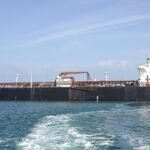
The closure of the strait — through which a substantial portion of the world’s oil supply passes — has once again rattled global markets and raised fears of energy disruptions. In some cases, Iran has reportedly restricted or controlled maritime passage, signaling its intent to leverage the waterway as a geopolitical tool.
Trump’s Warning and US Position
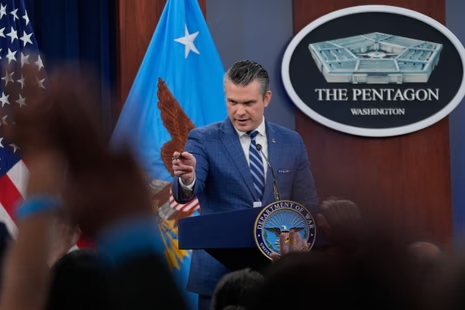
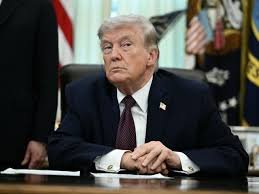
U.S. President Donald Trump has warned that the ceasefire hinges on Iran’s compliance, particularly the reopening of the Strait of Hormuz and curbs on its nuclear ambitions. He reiterated that American military forces would remain deployed in the region until a “real agreement” is achieved, signaling that Washington is prepared to act if the truce collapses.
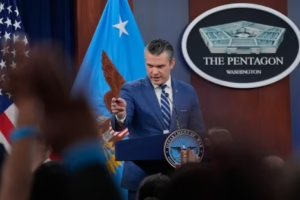
While the U.S. has paused direct strikes on Iran, officials have emphasized that the situation remains fluid, with military readiness still high amid concerns that hostilities could resume at any moment.
Israel Continues Lebanon Offensive
Israel, meanwhile, has continued its campaign against Hezbollah in Lebanon, stating that its operations are independent of the U.S.-Iran ceasefire. The ongoing strikes have resulted in heavy casualties and further inflamed regional tensions.
This divergence in interpretations — whether Lebanon is part of the ceasefire framework — has emerged as a key obstacle to de-escalation. Iran has accused both the U.S. and Israel of violating the spirit of the agreement, while Israel insists its actions are necessary for security.
Global Concerns and Economic Impact
The unfolding crisis has drawn international concern, with multiple countries urging restraint and calling for uninterrupted navigation through the Strait of Hormuz. India, among others, has stressed the importance of keeping the route open due to its critical role in global energy supplies.
Oil prices, which initially dipped after the ceasefire announcement, remain volatile amid uncertainty over the strait’s status and the broader stability of the region. Analysts warn that even a temporary disruption could have far-reaching consequences for global markets.
A Ceasefire on the Edge
Diplomatic talks are expected to continue in Islamabad, but the path forward remains uncertain. With ongoing violence in Lebanon, conflicting interpretations of the truce, and the strategic chokehold over the Strait of Hormuz, the ceasefire appears increasingly fragile.
For now, what was meant to be a pause in conflict has instead exposed deeper fractures — leaving the region, and the world, watching closely as tensions threaten to spiral once again.