










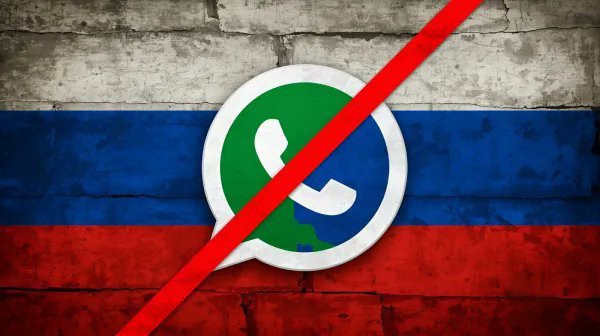
Moscow, February 13, 2026 — The Russian government has formally confirmed that it has blocked access to Meta’s widely used messaging service WhatsApp, marking a major shift in the country’s digital communication landscape. Kremlin officials said the move comes after the platform repeatedly failed to meet Russian legal standards, effectively ending uninterrupted access for tens of millions of users.
In a statement to the press, Kremlin spokesperson Dmitry Peskov explained that authorities made the decision because WhatsApp showed a “reluctance to comply with the norms and letter of Russian law.” He encouraged users who previously relied on the service — once one of Russia’s most popular messaging tools with more than 100 million users — to transition to a domestic alternative instead.
To that end, the government has been promoting Max, a state-backed “national messenger” developed by Russian tech firm VK, as the preferred platform for messaging. Designed to combine conversation, social features and even government services in one app, Max has been positioned by officials as a secure, all-in-one solution for daily digital communication. Peskov noted that manufacturers were instructed last year to pre-install the app on new phones and tablets sold in Russia.
Critics of the change, including WhatsApp itself, have argued that the ban undercuts private and secure communication. In a written response following the announcement, the messaging service said the government’s action appears aimed at driving users toward a platform that allows greater monitoring — a step it described as “backwards” for digital privacy.
Blocking Meta Apps and ‘Extremist’ Labels
Alongside the WhatsApp ban, Russian authorities have also taken steps against other major Meta-owned platforms. Facebook and Instagram have already been removed from Russia’s internet registry and are now accessible only through Virtual Private Networks (VPNs). Both platforms were previously designated as “extremist,” a label that effectively curtails their operations and restricts users from accessing them normally.
Wider Crackdown on Messaging Services
The restriction on WhatsApp is just the latest in a broader campaign by the Russian government to tighten control over digital communication. This includes newly announced “phased restrictions” on another popular messaging service, Telegram, which authorities say also fails to fully comply with local requirements. Telegram remains widely used across Russia for news, entertainment and even emergency alerts, making its partial blocking a contentious development.
Public Reaction and Future Implications
The reaction from Russian users has been mixed. Some people expressed concern that losing seamless access to familiar platforms will disrupt everyday communication and limit free expression online. Others have turned to VPN tools to bypass the blocks, maintaining access to blocked services despite regulatory barriers. International rights groups have also criticized the moves as part of a growing effort to insulate Russia’s internet from global platforms and reshape its digital ecosystem.
The WhatsApp ban underscores a deepening trend in which governments around the world are asserting greater control over the internet within their borders. In Russia’s case, the push toward “sovereign internet” strategies reflects a broader effort to bring foreign tech platforms under tighter oversight or replace them completely with locally controlled alternatives — a development that has far-reaching consequences for connectivity, privacy and digital freedom.