





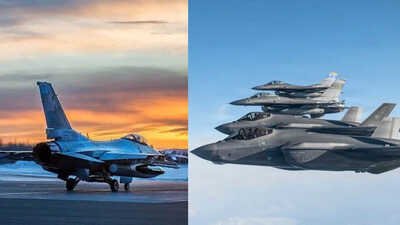
WASHINGTON — In a striking demonstration of military readiness, the United States has significantly expanded its air and naval presence in the Middle East, sending more than 50 advanced fighter jets while nuclear negotiations with Iran continue in Geneva.
According to U.S. officials cited by U.S. media, multiple F-22 Raptors, F-35 Lightning IIs and F-16 Fighting Falcons were tracked flying toward the region over the past 24 hours, accompanied by aerial refueling tankers — a sign that these assets are being prepared not just for rapid response but for sustained operations if needed.
“More than 50 U.S. fighter jets have been moved to the region,” one defense official told reporters, pointing to the scale and speed of the deployment.
Show of force alongside diplomacy
The surge in military hardware comes at a delicate moment: U.S. and Iranian representatives are engaged in a second round of indirect nuclear talks in Geneva, mediated by Oman. Both sides describe the discussions as making cautious progress — but also acknowledge that substantial gaps remain before a final agreement can be reached.
Iran’s Foreign Minister called the negotiations “serious and constructive,” while U.S. officials said negotiators would reconvene with refined proposals in the coming weeks.
Despite this diplomatic engagement, the visible buildup of U.S. military assets underscores Washington’s desire to reinforce deterrence in a region that has seen tensions flare repeatedly over Tehran’s nuclear ambitions and regional activities.
Naval reinforcement underway
In addition to the fighter jets, the USS Gerald R. Ford aircraft carrier strike group has departed the Caribbean and is en route to Middle Eastern waters, accompanied by several guided-missile destroyers. Officials say it will join the USS Abraham Lincoln and other U.S. naval forces already in the region — a rare concentration of strike capability aimed at deterring escalation.
At its current pace, the Ford group is expected to arrive near the Gulf within a week or more, depending on routing and weather conditions.
U.S. message to Tehran
Pentagon officials have framed the deployment as part of a broader effort to ensure stability and protect U.S. forces and interests in and around the Persian Gulf. While asserting that diplomacy remains the primary avenue for resolving the nuclear standoff, they have made clear that military options are being positioned “responsively, not aggressively.”
Analysts say the twin tracks of diplomacy and military posturing reflect a complex strategic calculation by the Biden administration — one that seeks to maximize leverage in negotiations without sparking a confrontation. Observers note that Iran’s nuclear program remains a core concern for Washington and its allies, even as both sides show limited willingness to compromise.
Regional implications
The bolstered U.S. presence is likely to reverberate across the Middle East. Gulf states and partners like Israel have long pushed for a firmer stance against Tehran’s nuclear ambitions and regional activities. At the same time, critics warn that such deployments risk inflaming tensions if misinterpreted by Iran or its allied networks.
For now, both diplomacy and military readiness continue to unfold in parallel, with the world watching whether negotiations can outpace the momentum of military reinforcement