







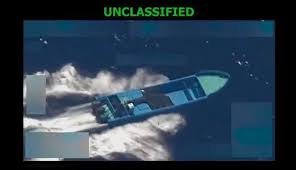
In a dramatic escalation of its overseas anti-narcotics operations, the U.S. military announced that strikes on three suspected drug-trafficking vessels in international waters have resulted in the deaths of 11 people. The strikes, which took place late Monday in the eastern Pacific Ocean and the Caribbean Sea, were carried out under the direction of U.S. Southern Command, according to official statements.
U.S. military officials said that intelligence indicated the small craft were traveling along well-known narco-trafficking routes and were involved in drug smuggling operations. In a message posted on social media, Southern Command identified those killed as “male narco-terrorists” and said that no U.S. service members were injured in the operations.
Two of the boats struck were in the eastern Pacific, each carrying four people, while a third vessel with three people was targeted in Caribbean waters. Videos released by the command show the boats being engulfed in explosions and fire as they sank.
These latest attacks are part of an ongoing campaign launched last year by the Trump administration aimed at disrupting maritime drug trafficking. According to U.S. officials, similar strikes have now claimed over a hundred lives since the initiative began in September 2025.
However, the aggressive use of military force has drawn sharp criticism both domestically and internationally. Legal experts and some lawmakers have questioned whether the strikes are lawful, noting that drug smuggling — while illegal — is typically treated as a criminal offense rather than an act of war. Critics have also pointed out that the U.S. government has so far provided little public evidence directly linking the targeted boats to major cartel operations.
The controversy deepened last year after an early naval strike reportedly targeted survivors from a previous engagement, prompting accusations from opponents that the U.S. had crossed a legal and moral line. Supporters of the campaign argue that traditional interdiction efforts had failed to stem the flow of narcotics and that stronger deterrence was necessary.
While the Pentagon frames the campaign as part of a broader effort to fight “narco-terrorists,” many questions remain about the long-term strategy and its implications for international law and regional stability.