




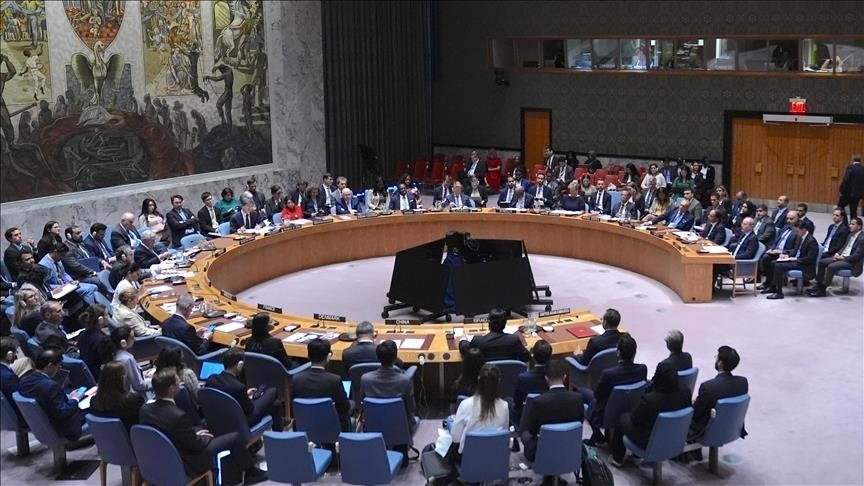
In a blow to its diplomatic efforts, Pakistan faced a notable setback at the United Nations Security Council’s (UNSC) 1267 Sanctions Monitoring Committee, with the latest six-monthly report underscoring international concerns about the continued activities of Pakistan-based terror groups and rejecting Islamabad’s bid to broaden terror designations.
The report, prepared by the UN’s 1267 monitoring team — which reviews compliance with sanctions targeting Al Qaeda, ISIL and affiliated organisations — explicitly linked the Pakistan-based militant group Jaish-e-Mohammed (JeM) to the deadly Red Fort terror attack in Delhi on November 9 that killed 15 people. It also revealed plans by the group to establish a new women-only wing called “Jamaat-ul-Muminat,” allegedly aimed at bolstering its extremist operations.
Diplomats present for the discussions confirmed that while most member states accepted the monitoring team’s findings, Pakistan was the lone dissenting voice, insisting that JeM was defunct — a position rejected by others on the committee. Islamabad has repeatedly sought to downplay the group’s operational relevance, but the latest UN report underscored its ongoing links to terror activities.
The report also touched on the Pahalgam attack in Jammu and Kashmir, noting that three suspects involved in the assault had been killed in subsequent operations. For the first time, the monitoring team named The Resistance Front (TRF) — widely regarded by Indian and some Western officials as a proxy for Lashkar-e-Taiba (LeT) — as responsible for that strike. Despite public disagreements over how such groups are defined, this mention signals growing international scrutiny of rebranded militant networks.
On another front, Pakistan’s push to include the Baloch Liberation Army (BLA) — a separatist group responsible for violent attacks along the China-Pakistan Economic Corridor (CPEC) — under the 1267 sanctions regime also failed to garner support. The committee’s report quoted several member states expressing that there was insufficient evidence to link the BLA with Al Qaeda or ISIL, a key criterion for listing under the current framework.
Pakistan had argued that the BLA and its affiliates posed a regional security threat and deserved the same global terror designation as other groups. But proposals co-sponsored with China were put on hold by influential members of the council, including the United States, France and the United Kingdom, who emphasized the necessity of clear evidence before expanding sanctions.
While Islamabad has long sought international recognition of the BLA’s threat — positioning itself as a victim of insurgency and urging collective global action — the outcome at the 1267 committee marks a diplomatic disappointment for its foreign policy ambitions. Conversely, New Delhi and other capitals welcomed the report’s findings as a reaffirmation of the need for objective evaluation of terror networks and accountability for groups that fuel violence across borders.
As the UNSC continues its regular reviews, the latest report sets the tone for renewed debate over how complex militant networks are categorized and countered on the world stage — a conversation that carries major implications for regional peace and collective counter-terrorism strategies.