






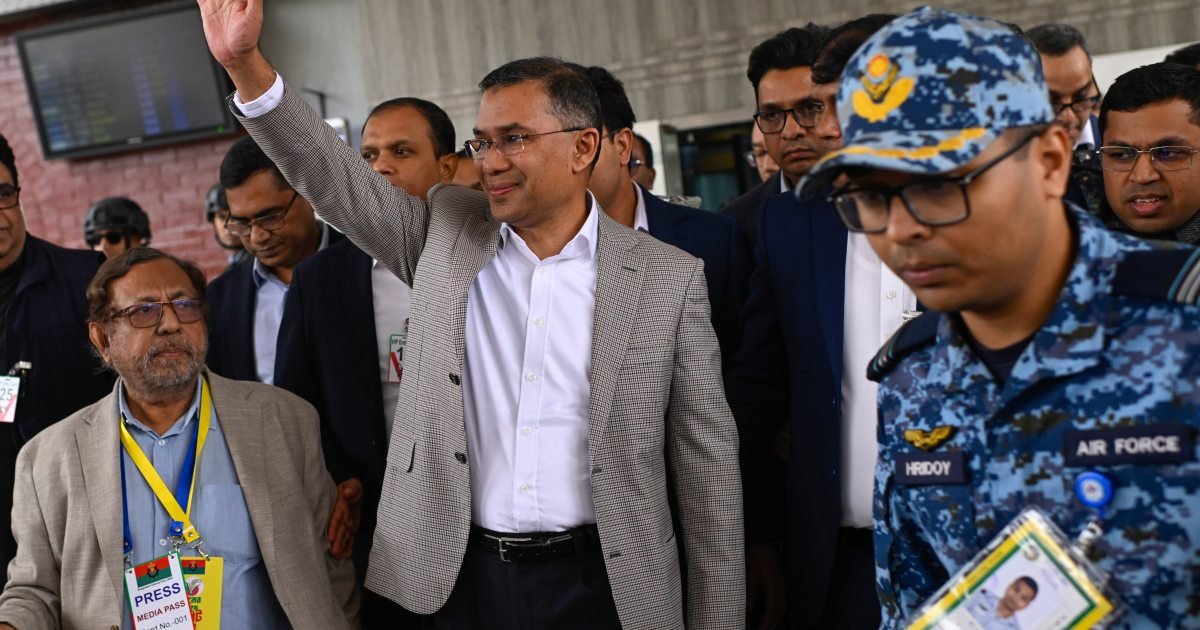
Dhaka, Bangladesh — In a dramatic turnaround of political fortunes, the Bangladesh Nationalist Party (BNP), led by Tarique Rahman, has secured a decisive win in the country’s general election — marking its first return to power in 20 years and ending the long dominance of the previous ruling party.
Preliminary results from Thursday’s vote show the BNP comfortably crossing the majority mark in the 300-seat Jatiya Sangsad, or national parliament, enabling the party to form the next government and ending an era of political stalemate.
At the heart of this victory is Tarique Rahman, the 60-year-old son of former prime minister Khaleda Zia and former president Ziaur Rahman, who returned to Bangladesh after nearly two decades of exile abroad. Rahman won election victories in both Dhaka-17 and Bogra-6 constituencies and is poised to become the country’s next prime minister.
A Turning Point for Bangladesh Politics
This election, widely seen as one of the most competitive in Bangladesh’s history, took place against the backdrop of massive political change. The longtime rule of former Prime Minister Sheikh Hasina — whose government had faced sustained criticism over corruption allegations and authoritarian practices — had already ended following a sweeping student-led uprising in 2024.
Millions of Bangladeshis, including a large cohort of young voters, turned out at polling stations in numbers not seen in years. Early tallies suggest robust voter participation, reflecting widespread public interest in reshaping the nation’s political direction.
Rahman’s Message and the Road Ahead
Rahman and the BNP ran on a platform promising to strengthen democratic institutions, promote rule of law, and expand economic opportunities. His supporters say the victory reflects growing voter frustration with the old political order and a deep desire for renewal.
Despite the celebratory mood among party ranks, Rahman urged supporters to forego large street processions and instead focus on prayers and peaceful reflection, signalling a cautious approach as the new government prepares to take power.
Regional and International Reactions
India’s Prime Minister Narendra Modi promptly extended his congratulations to Rahman and the BNP, expressing support for a democratic and inclusive Bangladesh and indicating a willingness to work closely with the incoming administration.
International observers have largely described the vote as peaceful and orderly, with many noting the symbolic significance of the first fully contested election since the upheaval two years ago.
A Historic Mandate After Two Decades
The BNP’s return to power marks a watershed moment in Bangladesh’s political landscape — a nation that has experienced alternating bouts of upheaval, economic ambition, and deep partisan rivalry since its independence. For many voters, this election represents an opportunity to reset the country’s trajectory and tackle longstanding challenges with fresh leadership at the helm.