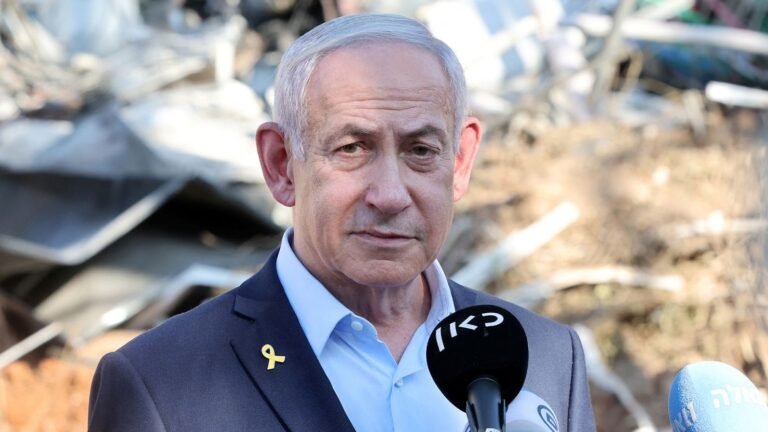








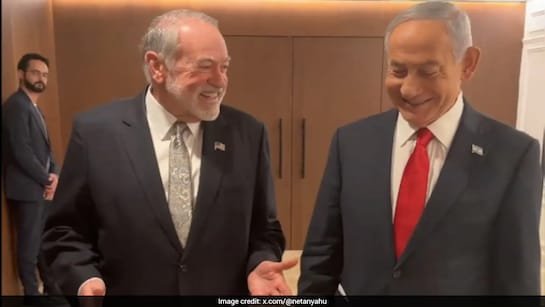
Jerusalem/Washington: Israeli Prime Minister Benjamin Netanyahu has publicly dismissed a wave of viral rumours claiming he had been killed, appearing in a fresh video alongside U.S. Ambassador Mike Huckabee and stating plainly: “Yes, I’m alive.”
The video, which quickly circulated across social media, was released after days of online speculation fueled by conspiracy theories and misleading visuals. In the clip, Huckabee jokingly remarks that he was sent to check on Netanyahu’s condition, prompting the Israeli leader to respond with a smile and a direct confirmation of his well-being.
Rumours sparked by viral “six fingers” claim
The controversy began when a previous video of Netanyahu triggered bizarre claims online that he appeared to have six fingers—something widely interpreted by conspiracy theorists as evidence of artificial intelligence manipulation. This led to unfounded speculation that the prime minister had been killed and replaced by a digital double.
To counter the claims, Netanyahu earlier posted a casual video filmed at a café, where he humorously displayed both hands to show he has five fingers on each. He even mocked the rumours, asking viewers to count them for themselves.
A “proof of life” moment amid disinformation surge
The latest clip with Huckabee is being seen as a more direct attempt to shut down the rumours once and for all. In addition to verbally confirming he is alive, Netanyahu again referenced the finger-count controversy, using humor to highlight how misinformation had spiraled online.
Officials have also stepped in to counter the speculation. Israeli representatives have confirmed that the circulating videos are genuine and not AI-generated, aiming to reassure the public amid growing concerns about digital misinformation.
Wider context: conflict and information warfare
The rumours emerged at a time of heightened tensions in the Middle East, particularly involving Israel and Iran. Analysts say such conspiracy theories are increasingly common during geopolitical crises, where misinformation, AI-generated content, and propaganda can spread rapidly across platforms.
Despite the online frenzy, Netanyahu has continued to make public appearances and issue statements, signaling that he remains active in office. His repeated video messages—ranging from lighthearted café moments to official clips—appear aimed at reinforcing a simple message: the rumours are false.
The episode highlights how quickly misinformation can gain traction in the digital age, especially when combined with emerging technologies like AI. Netanyahu’s response—mixing humor with direct denial—has helped quell speculation, but it also underscores a broader challenge facing global leaders: combating viral falsehoods in real time.