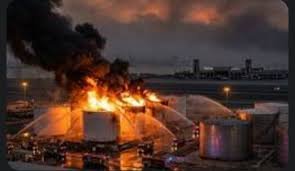








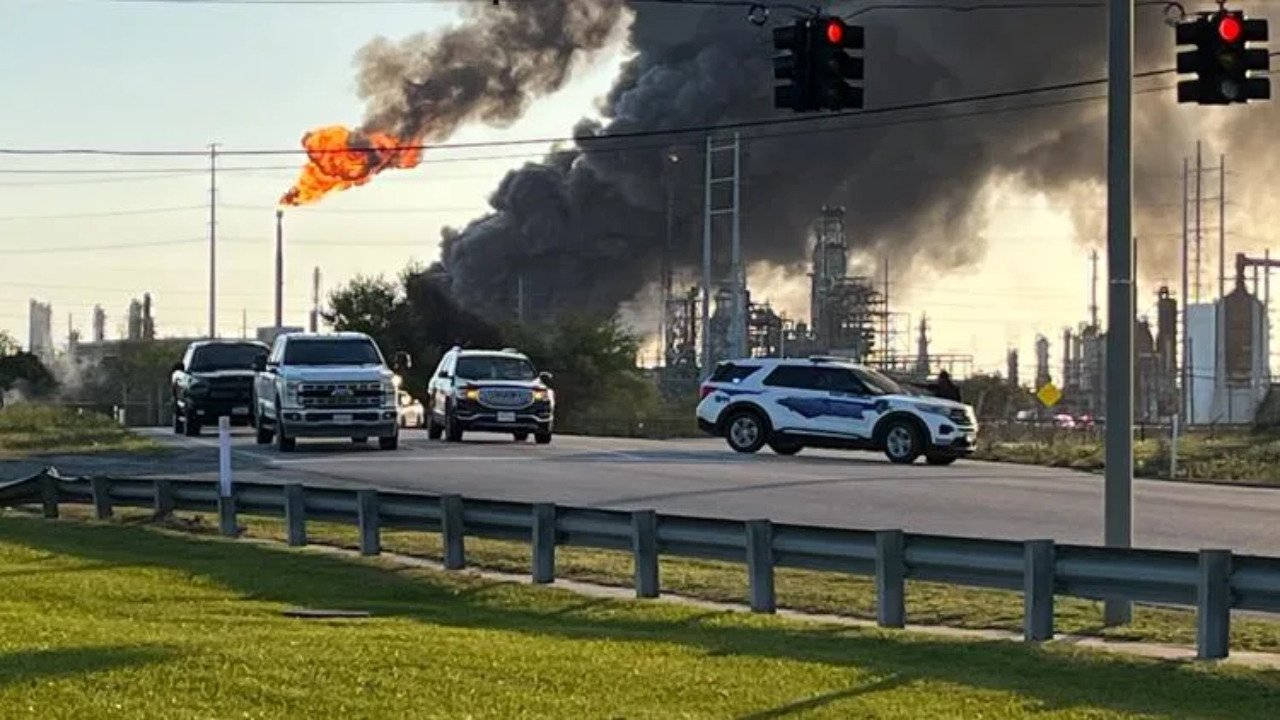
A massive explosion and fire at one of the largest oil refineries in the United States has intensified fears over global energy supply, as geopolitical tensions linked to the ongoing Iran conflict continue to push oil prices higher.
The incident occurred at a major refinery in Port Arthur, Texas, operated by Valero, which has the capacity to process roughly 435,000 barrels of oil per day. The blast sent thick plumes of smoke into the sky, rattled nearby neighborhoods, and forced authorities to issue a temporary shelter-in-place order for local residents.
Explosion and Fire Trigger Shutdown
According to officials and company filings, the explosion was caused by a sudden release of process fluid that ignited within a diesel hydrotreater unit, leading to a large fire and widespread disruption across the facility.
Although no injuries were reported, the scale of the damage forced a complete shutdown of the refinery, halting key operations including crude distillation and fuel processing units.
Residents miles away reported hearing a loud boom and feeling tremors, highlighting the intensity of the blast. Emergency crews worked for hours to bring the fire under control, while environmental authorities monitored air quality in the surrounding area.
No Evidence of Sabotage
Despite speculation on social media linking the explosion to geopolitical tensions, authorities have clarified that there is no evidence of sabotage or external attack. Early investigations point to an industrial accident rather than any deliberate act.
Oil Supply at Risk
The shutdown of such a large refinery has raised alarms in an already strained energy market. The Port Arthur facility represents a significant portion of U.S. refining capacity, and its outage is expected to tighten fuel supplies, particularly diesel.
This comes at a time when global oil markets are under pressure due to the escalating Iran conflict. Disruptions in key shipping routes—especially around the Strait of Hormuz—have already reduced oil flows and driven prices sharply upward.
Analysts warn that the combination of geopolitical instability and unexpected infrastructure outages could further fuel price volatility, affecting consumers worldwide.
Prices Surge Amid War Tensions
Since the escalation of hostilities involving Iran, global fuel prices have surged significantly. Diesel and gasoline markets, in particular, are experiencing tight supply conditions, with prices rising faster than crude oil itself.
Energy experts say incidents like the Port Arthur blast amplify existing risks, as the market has little buffer to absorb supply shocks.
What Happens Next?
There is currently no clear timeline for restarting the refinery, adding to uncertainty in the energy sector. Repairs and safety inspections are expected to take time, especially given the scale of the damage.
For now, the incident serves as a stark reminder of how fragile global energy systems can be—especially when industrial accidents collide with geopolitical crises.