








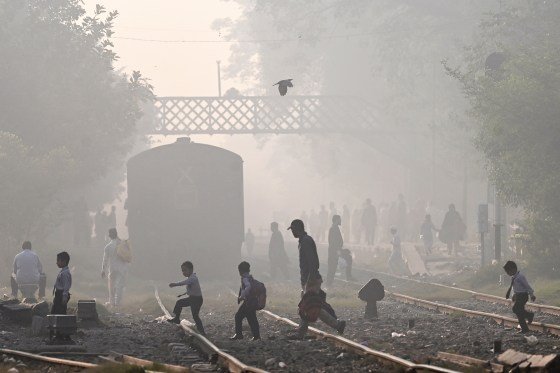
Pakistan has been identified as the most polluted country in the world in 2025, according to newly released global air quality data, underscoring a worsening environmental and public health crisis.
The findings, published by Swiss air quality monitoring firm IQAir and reported by Reuters, reveal that levels of fine particulate matter—known as PM2.5—in Pakistan reached alarmingly high concentrations, in some cases up to 13 times higher than the safety limits recommended by the World Health Organization (WHO).
PM2.5 particles are among the most dangerous pollutants because they are small enough to enter the bloodstream, contributing to respiratory diseases, heart conditions, and other serious health problems.
A Global Pollution Crisis
The report paints a troubling global picture as well. Out of 143 countries and territories studied, as many as 130 failed to meet the WHO’s recommended air quality standards. Only a small fraction of nations managed to maintain safe pollution levels, highlighting how widespread the issue has become.
Pakistan topped the list of the most polluted countries, followed by Bangladesh and Tajikistan. Meanwhile, Chad—previously ranked the most polluted in 2024—fell to fourth place, partly due to gaps in available data.
Experts say the findings reflect both persistent pollution sources and inconsistent monitoring in many parts of the world.
Cities in South Asia Among Worst Affected
The report also highlights severe air quality problems across South Asia. All of the world’s 25 most polluted cities in 2025 were located in India, Pakistan, and China.
In India, the city of Loni recorded the highest pollution levels globally, with average PM2.5 concentrations exceeding 112 micrograms per cubic metre—far above safe limits.
These findings point to a regional crisis, where rapid urbanization, industrial emissions, vehicle exhaust, and seasonal factors like crop burning continue to degrade air quality.
Fewer Cities Meeting Safety Standards
Another concerning trend is the declining number of cities meeting global air quality guidelines. Only about 14% of cities worldwide met WHO standards in 2025, down from 17% the previous year.
Researchers partly attribute this decline to factors such as wildfires, including those in Canada, which spread pollutants across large distances and affected air quality even in far-off regions.
Data Gaps and Monitoring Challenges
The report also points to growing challenges in tracking global pollution levels. The shutdown of a U.S.-run air quality monitoring programme has left gaps in data collection, especially in developing countries that relied heavily on those measurements.
As a result, experts warn that the full scale of the problem may be even greater than current figures suggest.
A Growing Health and Policy Concern
Environmental experts say Pakistan’s top ranking reflects long-standing issues such as industrial emissions, traffic pollution, and seasonal smog, particularly in urban centres like Lahore.
The findings add urgency to calls for stronger environmental policies, cleaner energy adoption, and regional cooperation to tackle cross-border pollution.
With air pollution now considered one of the leading global health risks, the report serves as a stark reminder that without coordinated action, the crisis is likely to deepen in the years ahead.