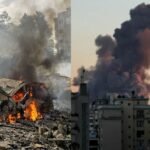
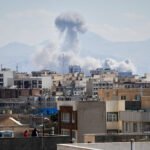

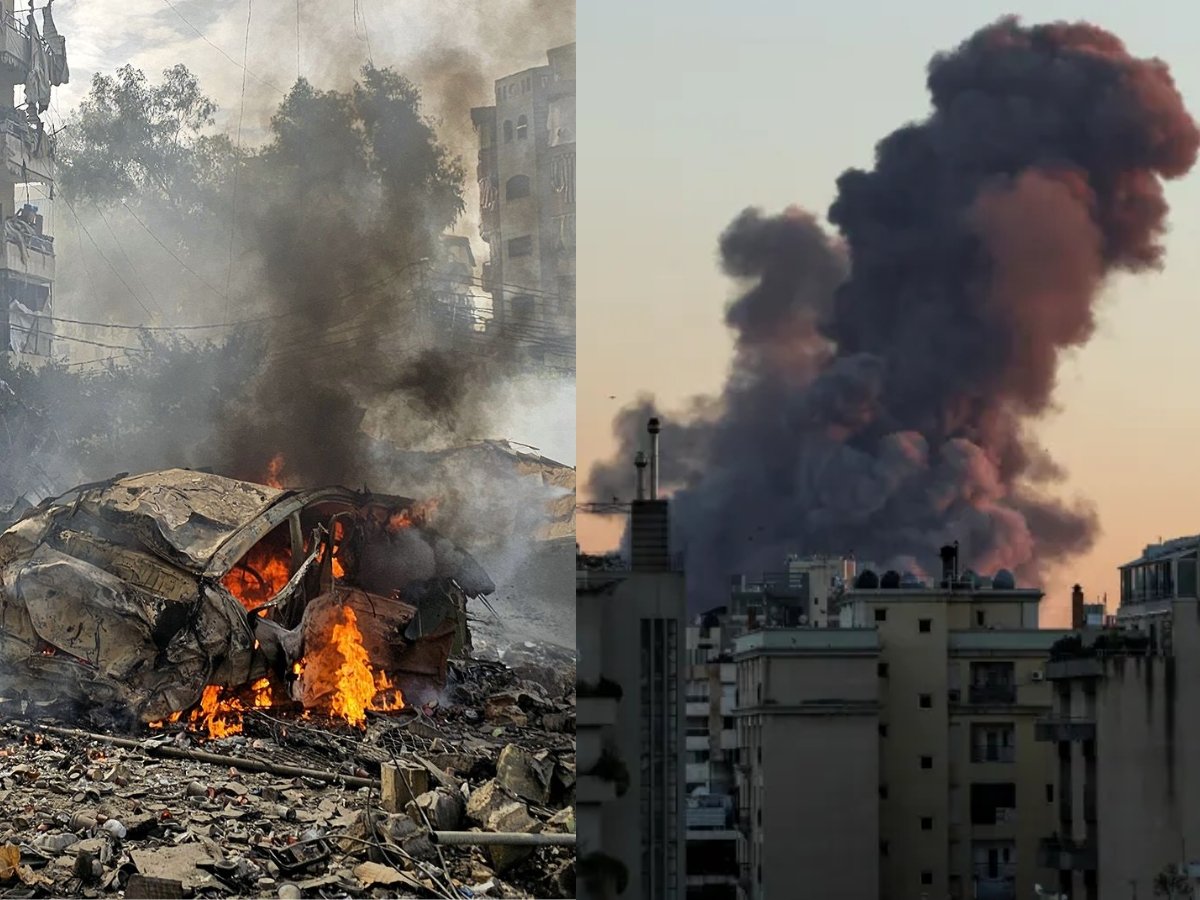
A sharp escalation in the Middle East conflict saw the Israeli military launch intensive airstrikes on the southern suburbs of Beirut, Lebanon, in retaliation for a rare rocket and drone attack carried out earlier against Israeli territory by the Iran-aligned militant group Hezbollah.
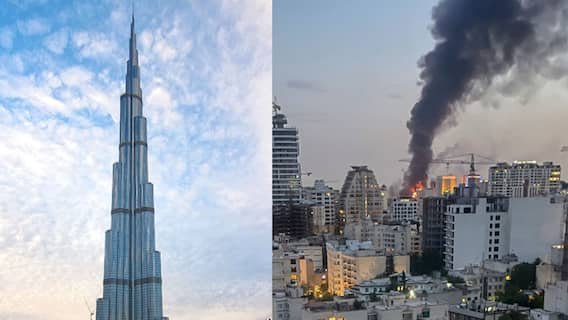
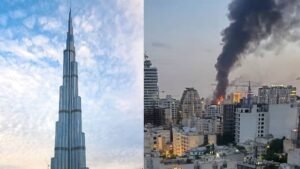
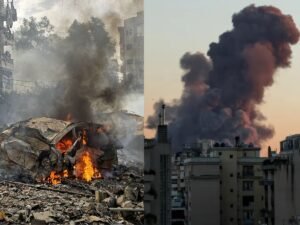
The strikes, which hit Dahiyeh, a heavily populated suburb of Beirut long considered a Hezbollah stronghold, marked one of the most significant flare-ups in months. Explosions shook the area early Monday, forcing residents to flee and triggering widespread alarm across the Lebanese capital.
Hezbollah Fires Rockets and Drones — First Since 2024 Ceasefire
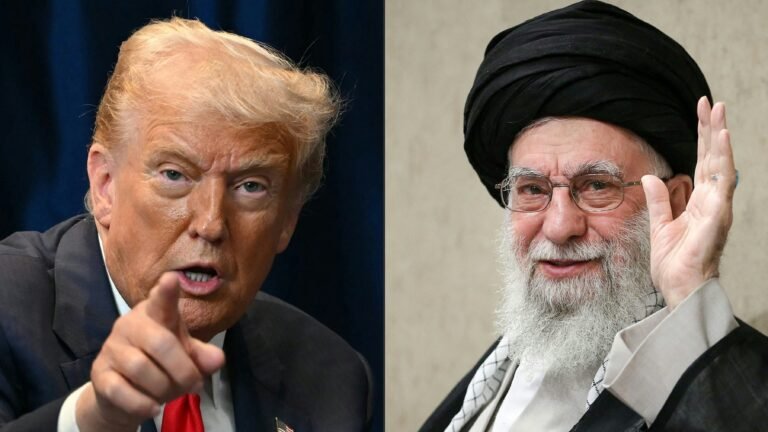
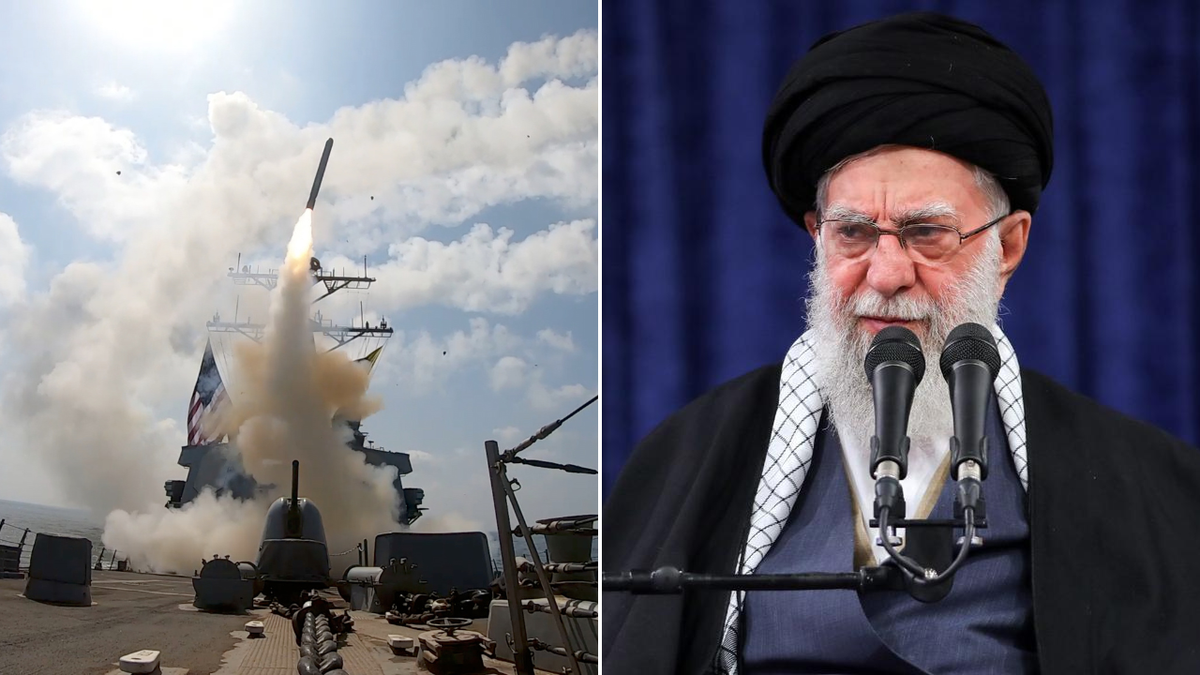
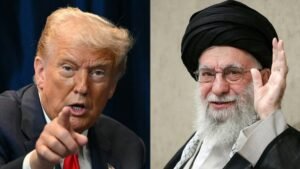
Hezbollah confirmed that it had launched a barrage of rockets and drones toward northern Israel, claiming the attack was in retaliation for the killing of Iran’s Supreme Leader, Ayatollah Ali Khamenei, in recent U.S.-Israeli strikes on Iranian soil. This was the first such offensive by Hezbollah since a ceasefire was brokered in late 2024 to end near-daily fighting along the Israel–Lebanon border.
Israeli officials said the projectiles were fired from southern Lebanon and that some were shot down, while others landed in open areas without causing major damage. The Israeli Defense Forces (IDF) responded swiftly with airstrikes, insisting their targets were Hezbollah combatants and infrastructure.
Civilian Fear and Displacement
Lebanese state media reported “major displacement” of residents in and around Dahiyeh and other areas in southern Lebanon as people tried to escape the conflict zone. The strikes revived traumatic memories of the 2023–24 Israel–Hezbollah war, which devastated southern Lebanon and Beirut’s suburbs.
While official casualty figures have not yet been released, reports from journalists on the ground describe multiple loud blasts and visible damage to buildings in parts of the capital. Lebanese authorities have not confirmed the number of people wounded or killed.
Political Reactions and Regional Pressure
Lebanese Prime Minister Nawaf Salam condemned Hezbollah’s attack, calling it “irresponsible” and a threat to Lebanon’s national security, even as he stopped short of directly blaming the militant group by name. His government has repeatedly emphasized it does not want Lebanon pulled back into a wider war.
Israel has held Hezbollah responsible for any escalation and maintains the strikes were necessary to blunt further threats from across its northern border. International actors, including Western and regional powers, have voiced concern that the conflict could broaden if left unchecked, especially given Iran’s direct involvement through its support for Hezbollah.
Wider Conflict Context
This latest confrontation comes against the backdrop of an already tense region: earlier U.S. and Israeli airstrikes on Iranian soil prompted Tehran to launch missiles at Gulf targets, and now Hezbollah’s first major action against Israel in nearly two years signals how quickly localized tensions can escalate into broader regional violence.