





India joins G7-linked critical minerals talks in Washington as the US pushes allies to counter China’s dominance in refining and secure strategic supply chains.
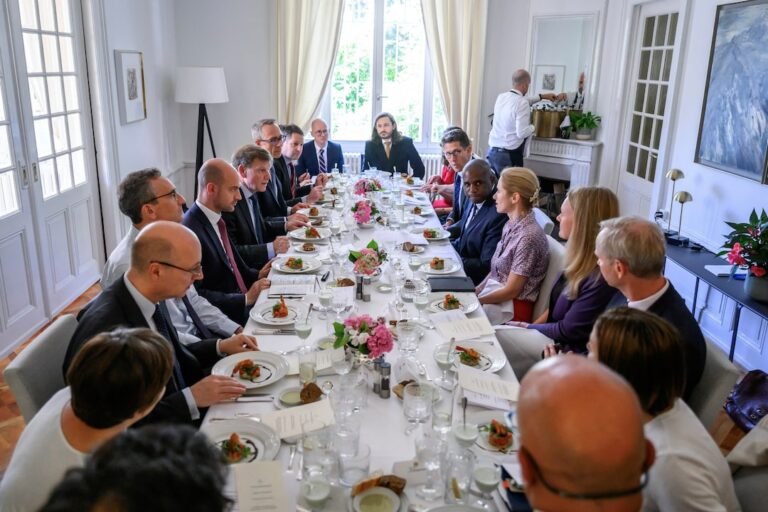
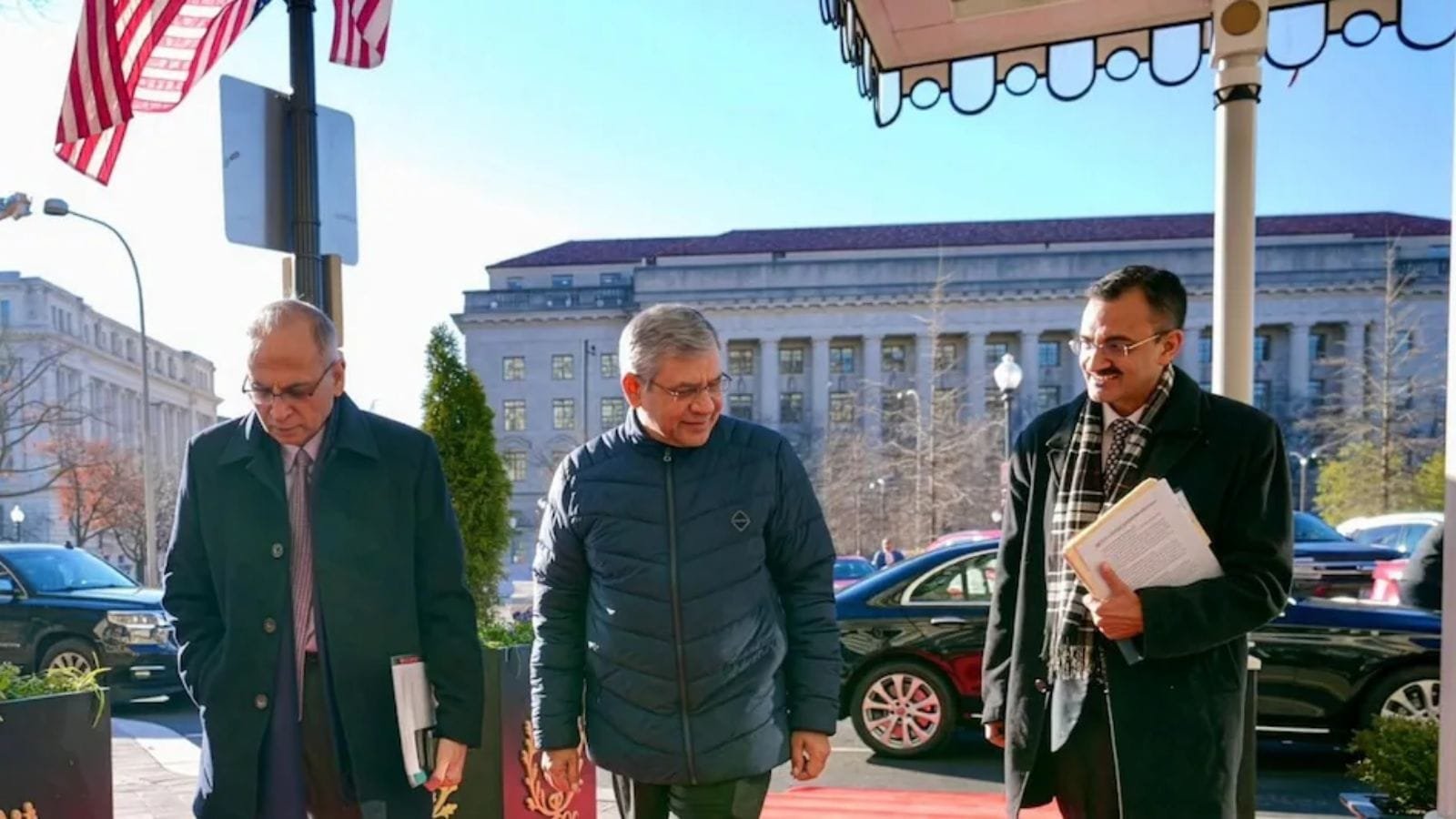
Washington is widening its critical minerals strategy beyond the G7, with India joining talks as concerns mount over China’s dominance in refining and supply chains. (Images sourced from @AshwiniVaishnaw -X)
India has entered high-level discussions on critical minerals in Washington, signaling a deeper alignment with the US and G7 economies as they seek to reduce dependence on China-dominated supply chains.
Minister for Electronics and Information Technology Ashwini Vaishnaw arrived in Washington DC on Sunday to participate in a critical minerals ministerial meeting hosted by US Treasury Secretary Scott Bessent.
The meeting is being held on the sidelines of a gathering of finance ministers from the Group of Seven, which includes Canada, France, Germany, Italy, Japan, the UK and the US, along with the European Union. India and Australia have also been invited.
“Arrived in Washington, DC. Will participate in the Critical Minerals Ministerial Meeting tomorrow. Secure critical mineral supply chains are vital for our goal of Viksit Bharat,” Vaishnaw said in a social media post.
Why Washington is widening the table
Bessent said on Saturday that India, Australia and several other countries would join the discussions, underlining Washington’s intent to broaden coordination beyond advanced economies.
He told reporters that he had been pushing for a dedicated G7 discussion on critical minerals since last summer’s leaders’ summit, citing what he described as China’s weaponisation of supply chains. G7 finance ministers had already held a virtual meeting on the issue in December, he added.
China’s grip on refining
According to the International Energy Agency, China is the world’s leading refiner for most major critical minerals, including copper, lithium, nickel, cobalt, graphite and rare earth elements, with an average market share of around 70 percent.
The agency has also flagged China’s control over downstream components such as manganese sulphate and phosphoric acid, key inputs for batteries and advanced manufacturing.
This concentration has become a strategic vulnerability for Western economies, particularly as demand for minerals accelerates with the energy transition and AI-led data centre expansion.
India’s expanding role beyond Quad
India is also set to join the US-led Pax Silica initiative ahead of an artificial intelligence summit being hosted by New Delhi. Although India is a Quad partner, it was not initially included in Pax Silica, which currently comprises the US, Japan, South Korea, Singapore, the Netherlands, the UK, Israel, the UAE and Australia.
India will also take part in another US meeting on critical minerals ahead of the Artificial Intelligence Impact Summit scheduled in New Delhi on February 19–20, according to Economic Times.
Pakistan angle
Separately, the US has a distinct critical minerals engagement with Pakistan, an initiative that has strengthened political ties between Washington and Islamabad.