




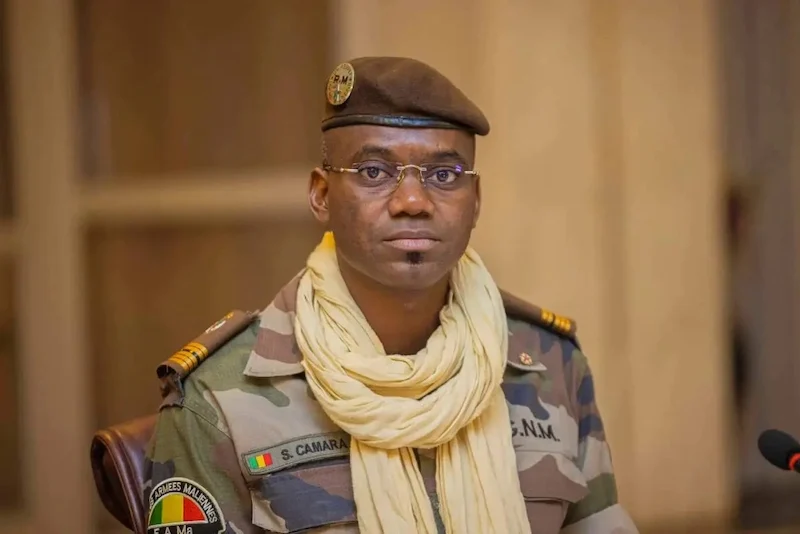
Mali’s defence minister has been killed in a major escalation of violence, as government forces continue to battle a powerful alliance of jihadist fighters and separatist rebels across the country.
General Sadio Camara died after his residence in the garrison town of Kati, near the capital Bamako, was targeted during a wave of coordinated attacks on Saturday. Officials and security sources say the assault was part of one of the most widespread and sophisticated offensives seen in Mali in recent years.
Coordinated attacks shake the country
The attacks struck multiple cities simultaneously, including Bamako and key military positions across central and northern Mali. Armed groups linked to al-Qaeda, particularly Jama’at Nusrat al-Islam wal-Muslimin (JNIM), reportedly joined forces with Tuareg separatist fighters from the Azawad Liberation Front (FLA), marking a rare and dangerous collaboration.
Witnesses described heavy gunfire and explosions near military bases, airports, and government buildings. In Kati, a strategic military hub just outside the capital, the minister’s home was hit during the assault, leading to his death.
The Malian army says it has launched counter-operations and regained control in some areas, but fighting has continued into a second day in several regions, highlighting the scale of the crisis.
A major blow to Mali’s military leadership
Camara, a key figure in Mali’s ruling military junta, had played a central role in shaping the country’s security strategy following coups in 2020 and 2021. His death is widely seen as a significant setback for the government at a time when it is already struggling to contain a long-running insurgency.
Analysts say the coordinated nature of the attacks—and the apparent cooperation between jihadist and separatist groups—signals a troubling shift in the conflict. The alliance has allowed insurgents to strike multiple high-value targets at once, exposing weaknesses in the country’s security apparatus.
Strategic cities under threat
In northern Mali, reports suggest that rebels have taken control of the city of Kidal, a long-contested stronghold and symbol of the country’s fractured territorial control. The fate of other key towns remains uncertain, with both the army and insurgents claiming gains.
The Malian government has imposed curfews in affected areas, including the capital, while airports and public services were temporarily shut down amid fears of further attacks.
Growing regional concern
The surge in violence has triggered alarm across West Africa and beyond. Regional bloc ECOWAS and international organisations have condemned the attacks and called for a coordinated response to prevent further destabilisation in the Sahel region.
Mali has been battling Islamist insurgents and separatist uprisings for more than a decade, but the latest developments suggest a new and more dangerous phase of the conflict. Despite efforts by the military government to strengthen security—often with support from foreign partners—the situation on the ground appears increasingly volatile.
As fighting continues, the death of the defence minister underscores the fragility of Mali’s security landscape and raises serious questions about the government’s ability to maintain control in the face of evolving threats.