







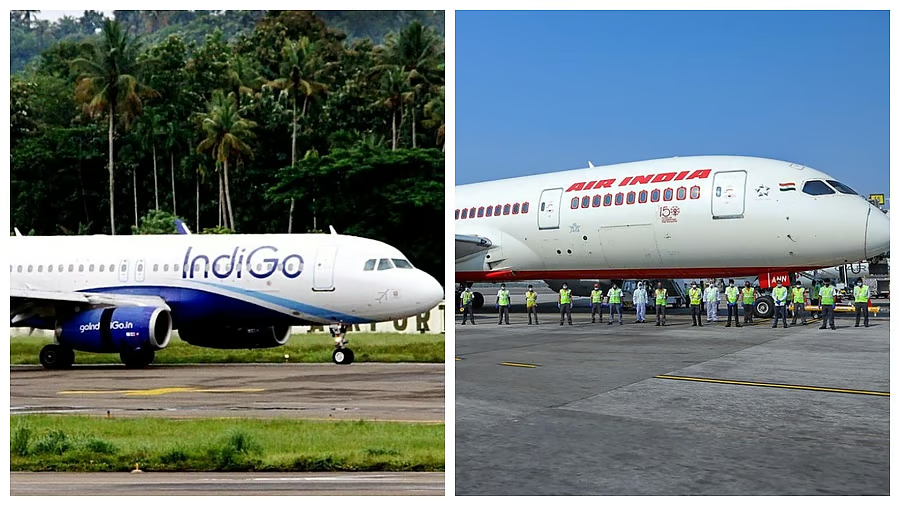
Air India, IndiGo, and SpiceJet on Thursday said some of their international flights have been impacted after Iran shut down its airspace amid widespread protests against Supreme Leader Ayatollah Khamenei and growing tensions with the United States.
In a post on X (formerly Twitter), Air India informed its passengers of potential delays overflying the region and cancellations where rerouting is not possible.
“Due to the emerging situation in Iran, the subsequent closure of its airspace, and in view of the safety of our passengers, Air India flights overflying the region are now using an alternative routing, which may lead to delays. Some Air India flights where currently rerouting is not possible are being cancelled,” the airline said.
Air India advised passengers to check the status of their flights before heading to the airport.
“Safety of our passengers and crew remain top priority,” it noted.
In a post early Thursday, IndiGo also said some of its international flights were “impacted” due to the “sudden airspace closure” by Iran.
“Our teams are working diligently to assess the situation and support affected customers by offering the best possible alternatives,” it said.
“This development is beyond our control, and we regret the disruption it may have caused to your travel plans. If your flight is impacted, we encourage you to visit our website to explore flexible rebooking options or to claim a refund, as per your preference,” it added.
Iran Closes Its Airspace
Iran on Thursday ordered the closure of its airspace to commercial aircraft without explanation as tensions remained high with the US over Tehran’s crackdown on nationwide protests. A notice to pilots said the closure was estimated to last until 7:30 am local time, as reported by the news agency Associated Press.
Iran previously shut its airspace during the 12-day war against Israel in June and when it exchanged fire with Israel during the Israel-Hamas war.
“Several airlines have already reduced or suspended services, and most carriers are avoiding Iranian airspace,” said the website SafeAirspace, which provides information on conflict areas and air travel. “The situation may signal further security or military activity, including the risk of missile launches or heightened air defense, increasing the risk of misidentification of civil traffic.”