


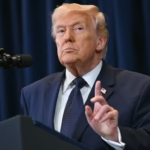



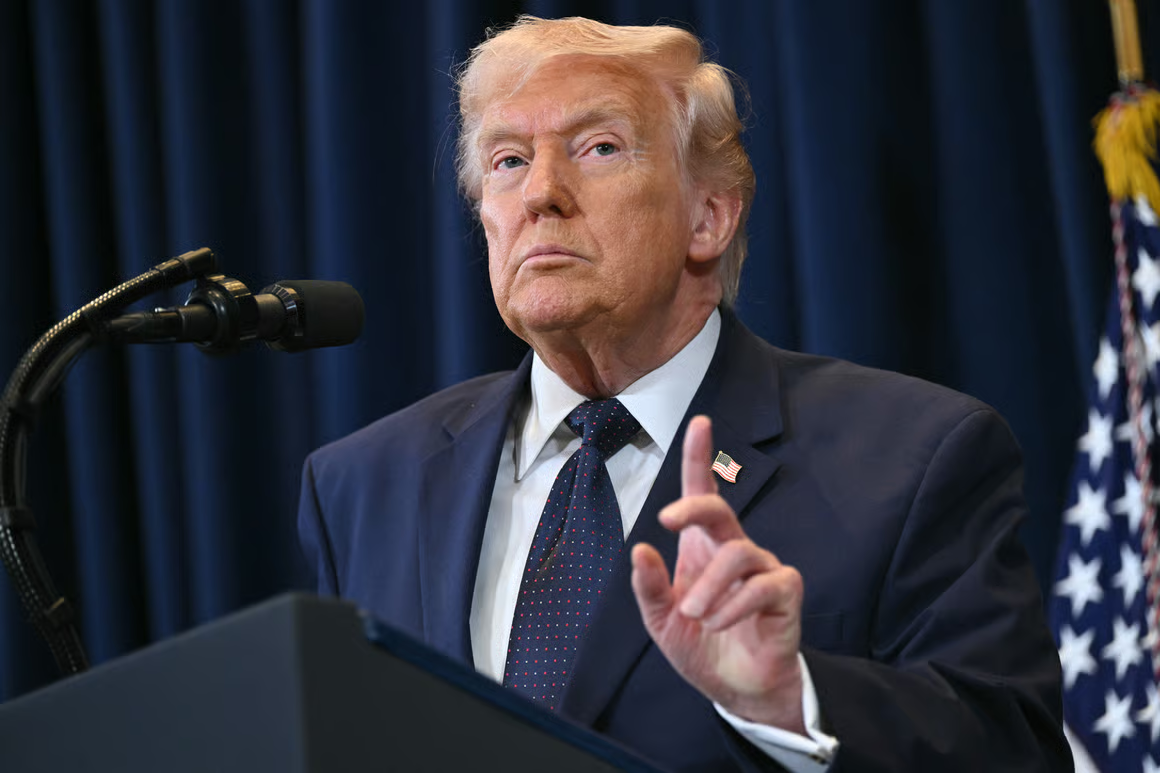
Global tensions are rising sharply as former U.S. President Donald Trump issued a stark warning to NATO allies, suggesting the alliance could face a “very bad future” if member countries fail to support Washington during the escalating crisis involving Iran.
The remarks come at a time of growing instability in the Middle East, with the U.S. seeking broader international backing for its strategy in the region. Trump’s comments signal increasing frustration within Washington over what it sees as insufficient support from long-standing allies.
Pressure on Allies Intensifies
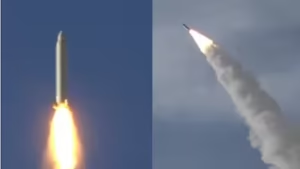
According to reports, Trump has been urging NATO countries to take a more active role in assisting U.S. efforts, particularly in securing key strategic routes and countering Iranian threats. His warning reflects a shift toward a more forceful tone, as the U.S. attempts to rally a coalition amid fears of further escalation.
However, several allies appear hesitant. Concerns over the risks of deeper involvement in a volatile conflict—and the potential economic and military consequences—have made many governments cautious about committing additional resources or forces.
This hesitation has exposed divisions within NATO, an alliance that has long been seen as a cornerstone of Western security.
Strategic and Economic Stakes
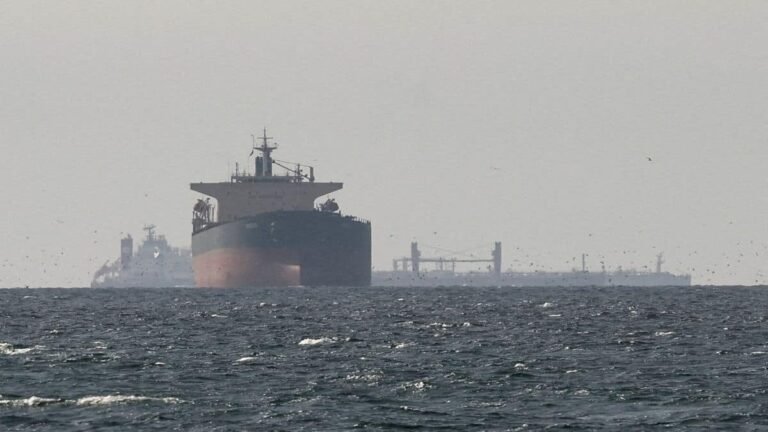
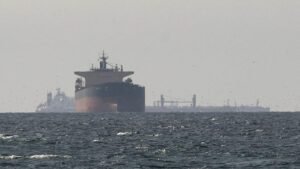
At the heart of the dispute lies not only military strategy but also global economic stability. Key shipping routes in the region remain under threat, raising fears of disruptions to oil supplies and spikes in energy prices.
The U.S. has argued that ensuring the নিরাপত্তা of these routes is a shared responsibility, especially for countries heavily dependent on energy imports. Yet, some allies are wary of being drawn into what could become a prolonged and unpredictable conflict.
Strains Within NATO
Trump’s warning has reignited debate about the future of NATO and burden-sharing among its members. For years, U.S. leaders have called on European allies to increase their defense spending and take on greater responsibility for collective security.
Now, with tensions over Iran intensifying, those long-standing disagreements are resurfacing in a more urgent and high-stakes context.
Analysts say the situation highlights a broader question: whether NATO can maintain unity in the face of increasingly complex global challenges.
Uncertain Path Ahead
As diplomatic efforts continue, the immediate future remains uncertain. The U.S. is likely to keep pressing allies for support, while European nations weigh their strategic interests against the risks of deeper involvement.
What is clear, however, is that the current standoff represents more than just a disagreement over policy—it is a test of the cohesion and resilience of one of the world’s most important military alliances.