

New Delhi: In a fresh escalation of rhetoric amid the ongoing Iran conflict, U.S. President Donald Trump has said that the United States no longer depends on oil passing through the strategically crucial Strait of Hormuz—and suggested that countries which rely on it should take responsibility for protecting the vital waterway.
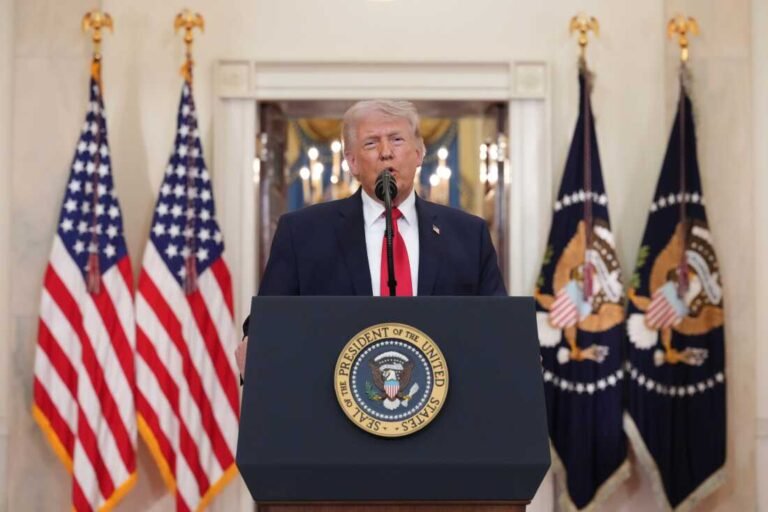
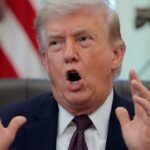
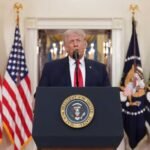
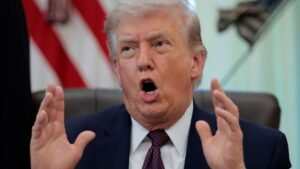
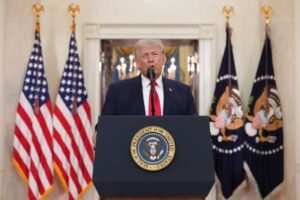
Speaking during a recent address on the Iran war, Trump declared that the U.S. “imports almost no oil” via the strait and has no need to rely on it going forward.
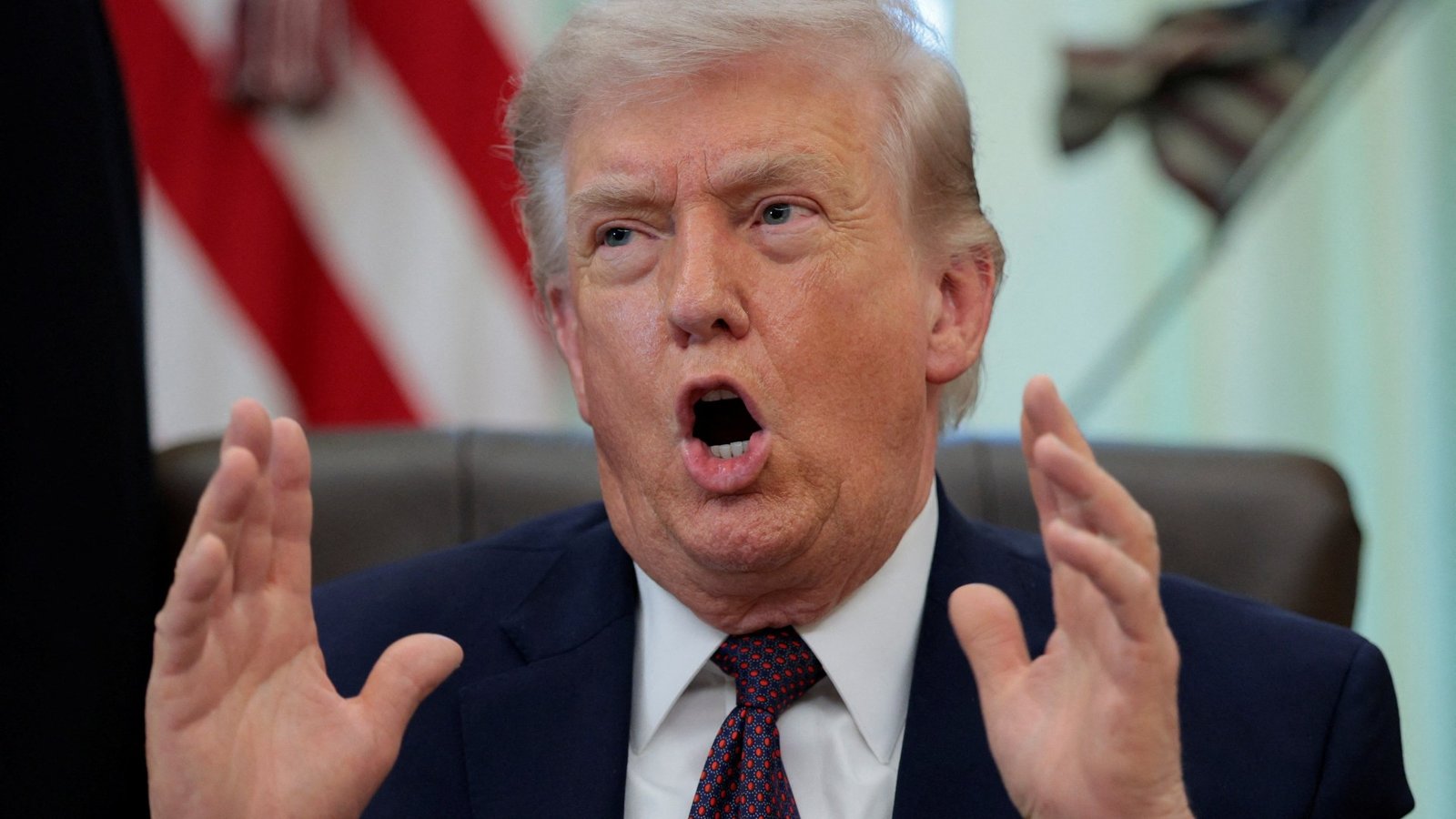
“We don’t need it… and the countries that do must take care of that passage,” he said, emphasizing America’s growing energy independence.
A Shift in Responsibility
Trump’s remarks mark a notable shift in tone, effectively placing the burden of securing one of the world’s most critical oil transit routes on other nations—particularly those in Asia that depend heavily on Gulf oil supplies.
The Strait of Hormuz is responsible for roughly one-fifth of global crude oil shipments, making it a key chokepoint in international energy markets. Its disruption since the outbreak of hostilities has sent shockwaves through global trade and triggered sharp rises in oil prices.
Oil Markets React
Markets reacted quickly to Trump’s comments. Oil prices surged, with Brent crude climbing above $105 per barrel and U.S. crude crossing $103, reflecting investor anxiety over prolonged supply disruptions.
Traders had initially hoped the speech might signal a path toward de-escalation or reopening of the strait. Instead, Trump’s insistence that other countries should “protect the oil they depend on” reinforced fears that the crisis could drag on.
War Nearing End—But Uncertainty Remains
Despite the tough stance, Trump maintained that the U.S. military campaign against Iran is nearing its conclusion, claiming that key objectives—such as weakening Iran’s military capabilities—have largely been achieved.
However, he stopped short of providing a clear timeline for ending the conflict, adding to uncertainty around the war’s final phase. Analysts note that while the U.S. has inflicted significant damage, Iran still retains strategic leverage—particularly through its control over the strait.
Pressure on Global Allies
Trump also suggested that countries affected by the disruption should either secure the passage themselves or consider alternative sources, including purchasing more energy from the United States.
This stance has raised concerns among allies, especially those heavily reliant on Middle Eastern oil, as it signals a reduced willingness by Washington to directly intervene in safeguarding global energy routes.
A Critical Global Flashpoint
The ongoing crisis around the Strait of Hormuz remains one of the most significant geopolitical flashpoints today. With shipping traffic severely disrupted and tensions still high, the situation continues to pose risks not just to the Middle East, but to the global economy at large.
While Trump projects confidence in America’s energy independence, the broader question remains unresolved: who will ensure the security of one of the world’s most important oil lifelines—and at what cost?