


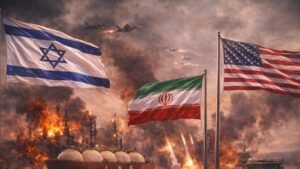

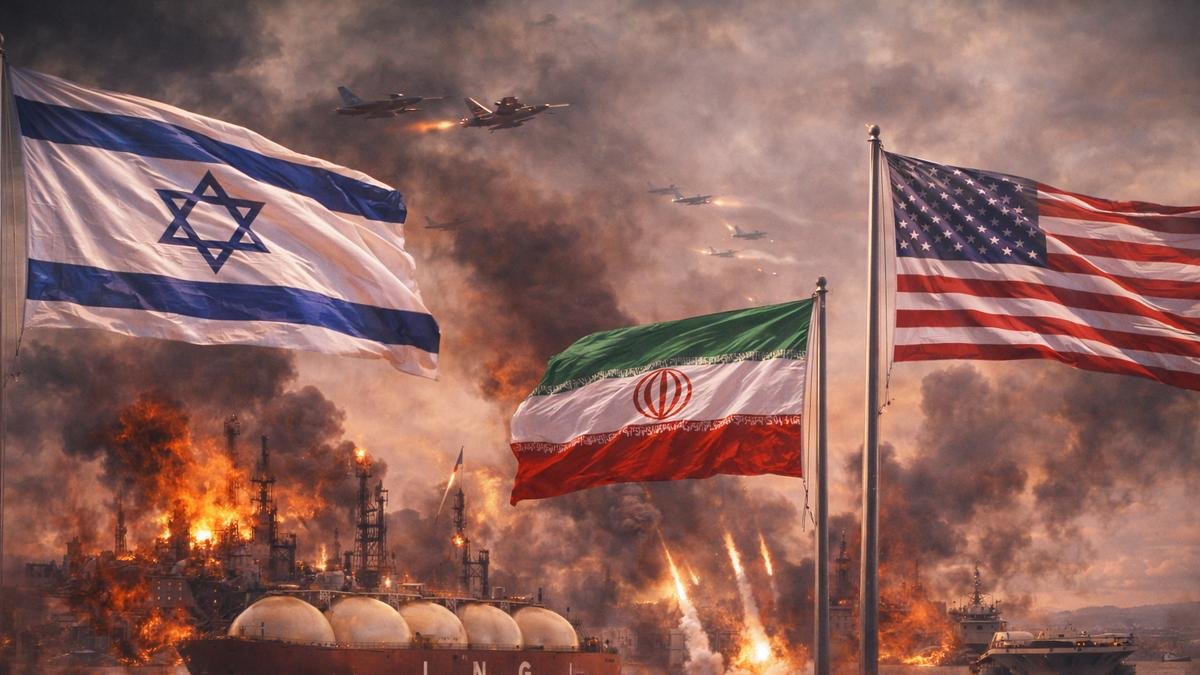
March 2026 — The Middle East has entered one of its most dangerous periods in decades as tensions between Iran, Israel, and the United States have erupted into a rapidly expanding military conflict. Airstrikes, missile attacks, and regional retaliations have pushed the region toward a wider war, raising global concerns about security, oil supplies, and geopolitical stability.
The Strike That Triggered the War
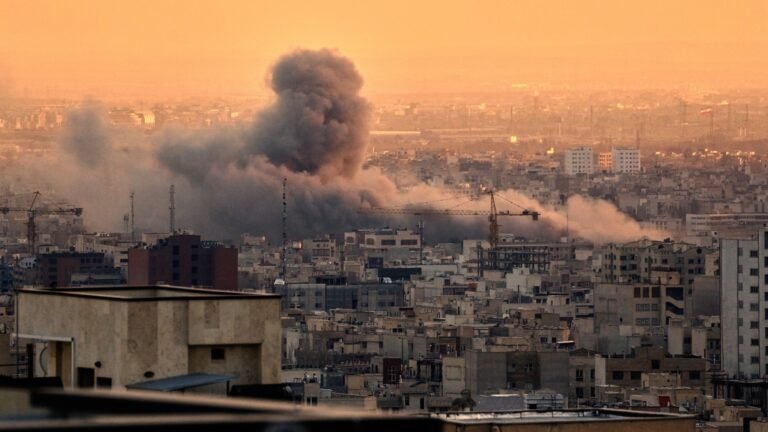
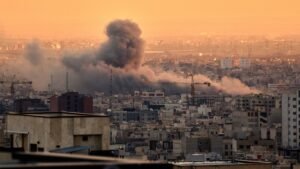
The current crisis began on February 28, 2026, when the United States and Israel launched a large-scale military campaign against Iran. The coordinated operation targeted Iranian military facilities, nuclear infrastructure, and senior leadership positions in Tehran and other cities. The strikes were part of a broader effort to weaken Iran’s military capabilities and curb its nuclear program after diplomatic negotiations collapsed earlier in the year.
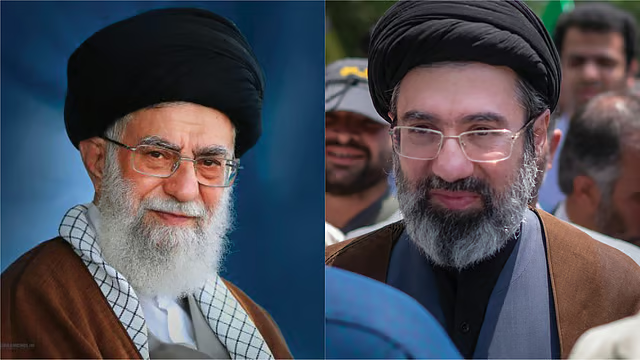
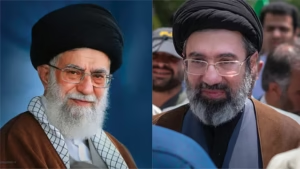
During the assault, multiple high-value targets were hit, including compounds connected to Iran’s top leadership. Iranian authorities later confirmed that Supreme Leader Ayatollah Ali Khamenei was killed in the strikes, creating a sudden leadership vacuum in the country and escalating tensions dramatically.
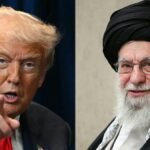
U.S. President Donald Trump defended the operation, arguing that decisive military action was necessary to prevent Iran from becoming a greater regional threat and to halt its nuclear ambitions.
Iran Responds with Retaliatory Attacks
Within hours of the initial strikes, Iran began launching retaliatory missile and drone attacks across the region. Iranian forces targeted Israeli cities as well as U.S. military bases in several Gulf countries, including Bahrain, Kuwait, and the United Arab Emirates.
The strikes quickly expanded beyond direct U.S.–Iran confrontations. Iranian-backed groups and regional allies joined the conflict, with Hezbollah militants launching rockets from Lebanon toward northern Israel. Israeli forces responded with airstrikes in Beirut and southern Lebanon, opening another front in the war.
Meanwhile, the U.S. military reported casualties among its personnel in the region. At least six American service members have been killed since the fighting began.
Conflict Spreads Across the Region
What began as a targeted military campaign quickly developed into a broader regional conflict. Iranian missiles and drones struck multiple locations across the Middle East, including ports, military installations, and energy infrastructure.
In one of the most significant escalations, Iran targeted shipping routes and infrastructure connected to the Strait of Hormuz, a crucial global oil transit route. The threat to this shipping lane caused tanker traffic to collapse and sent oil prices sharply higher, raising fears of global economic disruption.
Drone strikes and missile attacks have also affected countries not directly involved in the conflict. Some Gulf states have reported damage to infrastructure and attacks near diplomatic or military facilities as the war spreads across the region.
Military Operations Intensify
Military operations have continued to intensify on both sides. Israeli forces have carried out additional airstrikes inside Iran, targeting military bases and strategic installations. At the same time, Iranian missile barrages have continued to hit Israeli territory and U.S. installations in the region.
In a dramatic naval development, a U.S. submarine reportedly sank an Iranian warship during the ongoing conflict, underscoring the increasingly direct confrontation between the two countries’ militaries.
The widening battlefield has also drawn concern from neighboring countries. Several governments in the Gulf have warned that continued retaliation could pull them deeper into the war if attacks continue to hit their territory.
Human and Economic Impact
The conflict has already caused significant casualties and destruction. Reports indicate that more than 1,000 people have been killed in Iran, while dozens have died in Lebanon and Israel during the ongoing fighting.
Beyond the human toll, the war has disrupted daily life across the region. Airlines have canceled flights, airspace has been closed in several countries, and shipping companies have halted operations in critical maritime routes.
Energy markets have also reacted sharply. With oil shipments threatened through the Strait of Hormuz, global oil prices have surged, triggering volatility in financial markets worldwide.
Political Reactions and Global Concerns
International leaders have urged restraint as fears grow that the conflict could spiral into a broader regional war. Several countries, including European powers and Gulf states, have called for an immediate ceasefire and renewed diplomatic talks.
Inside the United States, the conflict has sparked political debate. Some lawmakers attempted to pass legislation that would require congressional approval before further military action against Iran, but the proposal failed in the Senate, reflecting strong political divisions over the war.
Meanwhile, Iran’s leadership is working to establish a new governing structure following the death of its supreme leader, adding uncertainty to the country’s political future and the trajectory of the conflict.
An Uncertain Road Ahead
As fighting continues, analysts warn that the war could last weeks or even longer. Military operations show no signs of slowing, and retaliatory strikes continue across multiple fronts in the Middle East.
The conflict now involves several countries, militant groups, and critical global trade routes, making it one of the most complex and dangerous crises the region has faced in years.
With diplomacy stalled and military escalation ongoing, the world is watching closely to see whether the conflict will expand further — or whether international pressure can push the parties toward a fragile ceasefire before the situation worsens.