



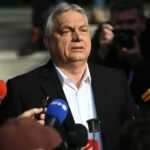


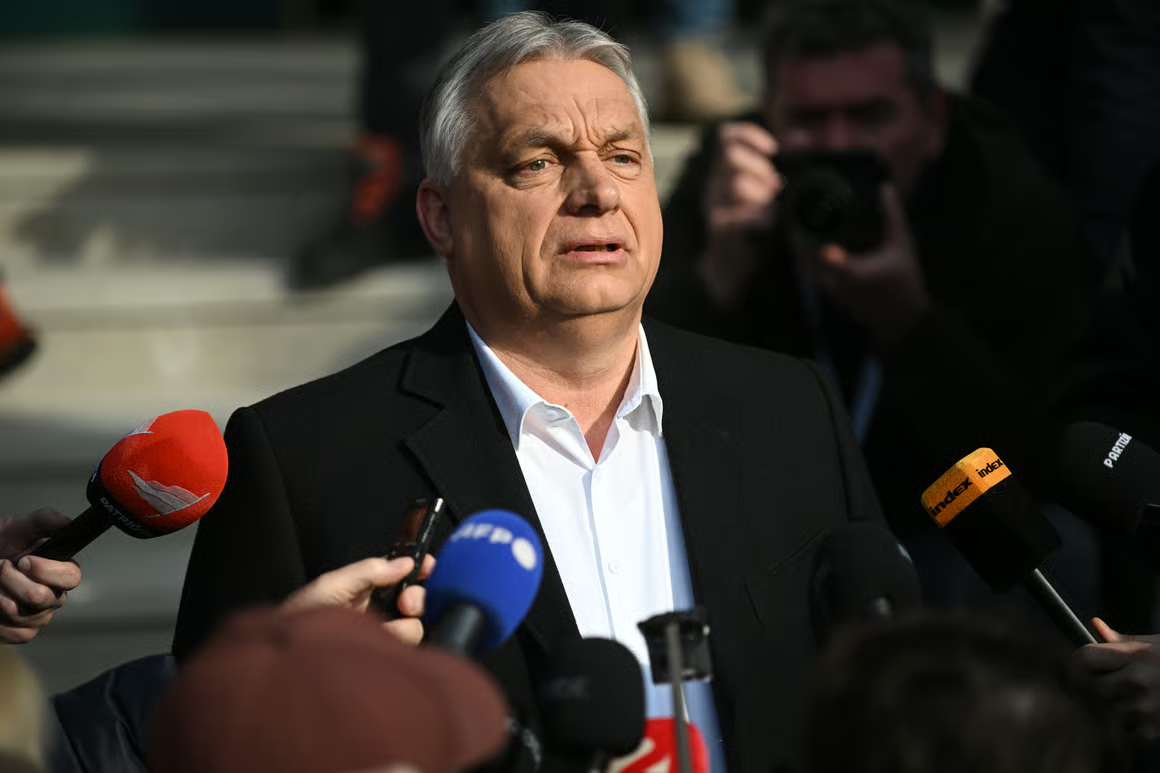
Hungary has entered a new political chapter after Prime Minister Viktor Orbán, one of Europe’s longest-serving leaders, conceded defeat following a landmark election that ends his 16-year rule.
Orbán, 62, who had been seeking a fifth consecutive term, acknowledged the outcome as “painful but unambiguous” after early results showed a decisive lead for opposition challenger Péter Magyar. The vote marks a dramatic turning point in Hungarian politics, where Orbán’s nationalist leadership had dominated since 2010.
A Stunning Upset
Preliminary results indicated that Magyar’s Tisza party was on track to secure more than two-thirds of the 199 parliamentary seats — a supermajority that would give it sweeping legislative power. This scale of victory surprised many observers, especially given Orbán’s long-standing political machinery and influence over state institutions.
The election also saw a surge in voter turnout, reflecting widespread public engagement and a growing appetite for change after more than a decade of centralized leadership.
The Rise of a New Challenger
Péter Magyar, a former insider who broke ranks with Orbán’s establishment, emerged as the face of the opposition. Campaigning on promises to tackle corruption, improve public services, and restore closer ties with the European Union, Magyar managed to unite a broad coalition of voters frustrated with Hungary’s economic stagnation and governance style.
His message resonated particularly with younger voters and urban populations, many of whom viewed the election as an opportunity to reset Hungary’s political direction.
Orbán’s Controversial Legacy
Orbán’s tenure has been both influential and divisive. A self-described advocate of “illiberal democracy,” he positioned Hungary as a nationalist counterweight within the European Union. His government frequently clashed with Brussels over issues ranging from judicial independence to migration policy and media freedom.
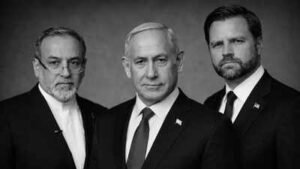
Internationally, Orbán built close ties with leaders such as Russian President Vladimir Putin and enjoyed support from figures like former U.S. President Donald Trump, who endorsed him during the campaign.
Critics, however, accused his administration of eroding democratic institutions, restricting press freedom, and fostering corruption. Supporters argued that his policies protected Hungary’s sovereignty and cultural identity.
Why Voters Turned Away
Several factors appear to have contributed to Orbán’s decline in popularity. Rising inflation, economic slowdown, and concerns over living standards played a significant role in shaping voter sentiment. At the same time, fatigue after years of one-party dominance and growing dissatisfaction among younger generations created momentum for change.
The election ultimately became a referendum not just on Orbán himself, but on the broader direction of Hungary’s future — whether to continue on a nationalist path or re-align more closely with European democratic norms.
What Comes Next
With a strong parliamentary majority, Magyar is expected to have the authority to roll back many of Orbán-era policies and initiate reforms. However, analysts caution that dismantling entrenched political networks and institutions built over 16 years will not be easy.
The transition could also reshape Hungary’s relationship with the European Union and influence broader political trends across Europe, where populist movements have often looked to Orbán’s model for inspiration.
For now, Hungary stands at a crossroads — one defined not just by a change in leadership, but by a potential redefinition of its political identity.