







Tensions in the Indian Ocean have intensified after the United States sank an Iranian naval warship near Sri Lanka, a dramatic military action that has sparked debate about regional security and India’s role in safeguarding stability in the area.
The incident, which occurred on March 4, has not only deepened the conflict between Washington and Tehran but also raised uncomfortable questions for the Indian government and Prime Minister Narendra Modi about New Delhi’s ability to act as a “guardian” of security in the Indian Ocean region.
A Dramatic Naval Strike in the Indian Ocean
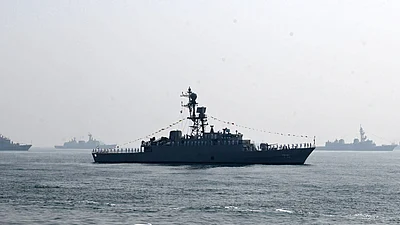
According to officials and military reports, a United States Navy submarine torpedoed the Iranian frigate IRIS Dena in international waters roughly 40 nautical miles off the coast of Galle in southern Sri Lanka.
The attack reportedly killed at least 87 sailors, while dozens more were initially listed as missing. Sri Lankan authorities managed to rescue 32 survivors after the ship sent a distress signal shortly before sinking.
The United States later confirmed that the vessel had been struck by a Mark-48 torpedo launched from a nuclear-powered submarine. The sinking marked a rare modern example of a submarine destroying a surface warship in combat and the first such confirmed action by a US submarine in decades.
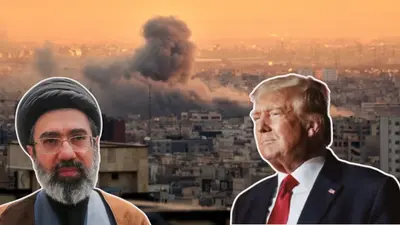
The incident took place against the backdrop of a rapidly escalating confrontation between Iran and a coalition led by the United States and Israel.
Warship Had Recently Visited India
One detail that has drawn particular attention is that the Iranian frigate had recently taken part in the International Fleet Review and the MILAN naval exercise hosted by India in Visakhapatnam.
The multinational event brought together dozens of navies from around the world for maritime cooperation exercises. After the drills ended, the Iranian vessel departed Indian waters on February 25 and was sailing home when it was attacked in the Indian Ocean.
Because the ship had been participating in an event hosted by India shortly before the attack, analysts say the incident has highlighted the limitations of New Delhi’s influence over security developments in waters it often describes as its strategic backyard.
Some critics argue that the episode exposes gaps in India’s ambition to act as a stabilizing power in the region.
A Blow to India’s “Security Provider” Image
For years, the government of Prime Minister Narendra Modi has promoted the idea that India should serve as a “net security provider” in the Indian Ocean.
This concept envisions India playing a leading role in protecting sea lanes, deterring conflict, and ensuring regional stability.
However, the sudden sinking of an Iranian warship so close to the subcontinent has raised doubts about how much influence India actually wields when major powers such as the United States become directly involved in military action.
Experts note that the strike occurred in waters not far from India and Sri Lanka, a region where India has historically sought to maintain strategic dominance.
The event, therefore, underscores the reality that global powers can still operate freely in the area regardless of New Delhi’s security aspirations.
Questions About the Legality of the Attack
Another major debate triggered by the incident concerns whether the attack was legally justified.
Some military analysts argue that if the Iranian vessel was not actively participating in combat or threatening US forces, the strike could be controversial under international law.
Reports suggest that the frigate may have been lightly armed or even carrying limited munitions because ships participating in international exercises often follow protocols restricting their weapons load.
Critics therefore question whether the ship posed an immediate threat when it was targeted.
Such concerns have fueled discussions among international law experts about the legality of the strike and the risk of escalation in global waters.
Political Reactions in India
The incident has also sparked political debate inside India.
Opposition leaders have questioned the government’s silence or cautious response to the event, arguing that a warship which had recently been in Indian waters was destroyed in what many view as India’s strategic neighborhood.
Some lawmakers say New Delhi should have taken a clearer diplomatic stance, especially given the potential implications for regional stability and India’s foreign policy.
The government, however, has largely focused on maintaining neutrality and avoiding being drawn into the conflict between the United States and Iran.
Sri Lanka’s Role and Neutrality
Sri Lanka, located closest to the site of the sinking, found itself dealing with the humanitarian consequences of the incident.
Search-and-rescue operations conducted by the Sri Lankan Navy recovered bodies and transported survivors to hospitals in Galle.
Sri Lankan authorities emphasized that the country remains neutral in the conflict and will follow international maritime law in dealing with the aftermath of the sinking.
Another Iranian vessel in the region reportedly sought refuge in Sri Lankan waters shortly afterward, further highlighting how the conflict has begun spilling into the Indian Ocean.
Escalation in a Wider Conflict
The naval incident is widely viewed as part of a broader confrontation between Iran and a US-led coalition.
Earlier in the week, airstrikes and missile attacks had already heightened tensions across the Middle East. The sinking of the Iranian warship demonstrated that the conflict is no longer confined to the region but may extend into key global maritime routes.
Strategists warn that if hostilities continue to spread, the Indian Ocean could become another arena of competition between major powers.
This possibility carries major implications for international trade, since many of the world’s busiest shipping lanes pass through the region.
Strategic Implications for the Region
For India, the episode presents a complex challenge.
On one hand, New Delhi maintains strong ties with Washington and participates in strategic partnerships with the United States and other Indo-Pacific allies.
On the other hand, India has historically maintained diplomatic relations with Iran and relies on stable maritime routes in the region.
The sinking of the Iranian warship so close to the subcontinent illustrates how difficult it may be for India to balance these relationships while preserving its image as a regional stabilizer.
Analysts say the event may force policymakers in New Delhi to reconsider how much influence the country can realistically exercise over the security environment in the Indian Ocean.
A Sign of Changing Power Dynamics
The destruction of the Iranian frigate also highlights the evolving nature of modern naval warfare.
Submarines remain among the most powerful and stealthy weapons at sea, capable of striking targets with little warning.
The attack demonstrated how quickly a conflict can escalate in international waters and how vulnerable even large warships can be to undersea threats.
It also serves as a reminder that the strategic contest between global powers continues to play out far beyond traditional battlefields.
Conclusion
The sinking of the Iranian warship near Sri Lanka has become more than just a naval incident. It has triggered geopolitical debate about the expanding conflict involving the United States and Iran, raised questions about international law, and exposed the limits of regional powers’ influence.
For India and Prime Minister Narendra Modi, the episode has complicated the narrative that New Delhi can act as the primary security guardian of the Indian Ocean.
As tensions continue to rise and global powers assert their presence in the region, the incident may serve as a stark reminder that control over the world’s oceans remains fiercely contested.