


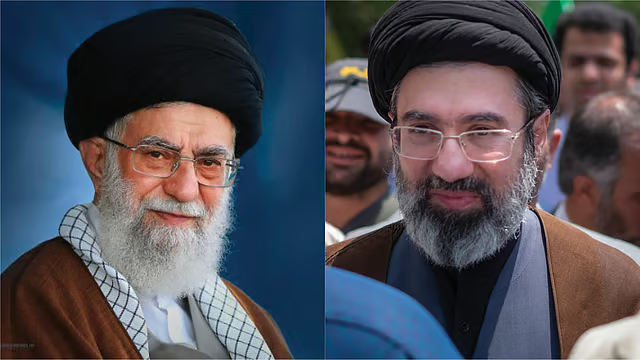
Tehran — Iran is facing a historic political transition following the death of its long-time supreme leader, Ali Khamenei. As the country grapples with internal uncertainty and rising regional tensions, attention has rapidly shifted to a possible successor: his son, Mojtaba Khamenei.
The elder Khamenei, who had led the Islamic Republic since 1989, was reportedly killed in late February during large-scale military strikes carried out by the United States and Israel, according to multiple international reports. His death has created a sudden leadership vacuum in one of the Middle East’s most influential countries.
Power Vacuum and Interim Leadership
Following the announcement of the supreme leader’s death, Iranian authorities established a temporary governing body known as the Interim Leadership Council. The council — composed of President Masoud Pezeshkian, Chief Justice Gholam-Hossein Mohseni-Eje’i, and senior cleric Alireza Arafi — is responsible for managing state affairs until a permanent leader is selected.
Under Iran’s constitution, the country’s powerful clerical body, the Assembly of Experts, must ultimately choose the next supreme leader. The position is the highest authority in Iran, controlling the armed forces, the judiciary, and key strategic decisions.
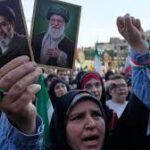
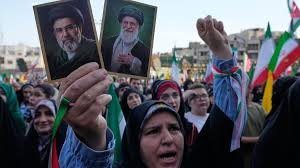
As funeral ceremonies for Ali Khamenei take place across the country, the question of succession has become one of the most urgent issues facing the Iranian political establishment.
Mojtaba Khamenei: From Shadow Figure to Front-Runner
Among the possible candidates, Mojtaba Khamenei has emerged as one of the most prominent figures being discussed. A mid-ranking cleric in his mid-50s, he has long been considered an influential figure behind the scenes in Iran’s political system.
Although Mojtaba has never held a formal government position, analysts say he played a significant role within his father’s office, often acting as a gatekeeper to the supreme leader and maintaining close ties with powerful security institutions such as the Islamic Revolutionary Guard Corps (IRGC).
These connections have strengthened his standing among hardline factions in Iran’s political establishment, making him a serious contender for the country’s most powerful office.
Controversy Over Dynastic Succession
Despite his influence, Mojtaba Khamenei’s potential rise has sparked debate both inside and outside Iran. Critics argue that the transfer of power from father to son would resemble dynastic succession, something the Islamic Republic was originally founded to oppose after the 1979 revolution.
Some experts also point out that Mojtaba lacks the high religious rank traditionally associated with the position of supreme leader. While he holds the clerical title of Hojjatoleslam, the role has historically been filled by senior Ayatollahs with extensive theological credentials.
Nevertheless, supporters within Iran’s conservative circles believe his political experience and strong security ties could outweigh such concerns.
Other Potential Successors
Mojtaba Khamenei is not the only figure being discussed as a potential successor. Several other influential clerics and political leaders have also been mentioned in reports.
Among them is Hassan Khomeini, the grandson of Iran’s revolutionary founder Ruhollah Khomeini, who is seen as more reform-minded and enjoys respect among moderate clerics. Another candidate is Chief Justice Mohseni-Eje’i, a hardline figure with strong support among conservative factions.
Other names occasionally mentioned include prominent clerics and political figures linked to Iran’s ruling establishment, though the final decision remains uncertain.
Rising Tensions in the Region
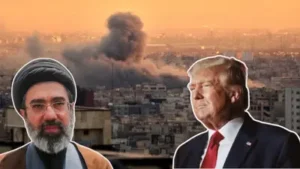
The leadership transition is taking place against a backdrop of heightened regional conflict. The airstrikes that reportedly killed Ali Khamenei were part of escalating hostilities involving Iran, Israel, and the United States.
The instability has raised concerns among analysts that the power struggle inside Iran could further intensify tensions in the Middle East.
Some observers believe the country’s leadership will prioritize stability and continuity, potentially favoring a candidate who already enjoys support within Iran’s security institutions.
A Turning Point for Iran
The coming weeks are expected to be decisive for Iran’s political future. The Assembly of Experts will need to weigh religious legitimacy, political power, and national stability as it selects the next supreme leader.
Whether Mojtaba Khamenei ultimately assumes the position or another cleric is chosen, the decision will mark one of the most significant moments in Iran’s history since the 1979 revolution.
For now, the world is watching closely as the Islamic Republic navigates a critical leadership transition amid domestic uncertainty and growing international pressure.